7 Best Transfer Switch For Generator [2026]
The best transfer switch for generator are the Generac 6853 HomeLink, EZ Generator Switch, and Nature’s Generator 50A Switch — chosen for their upgradeability, DIY-friendly installation, and high-capacity power handling, respectively.
Getting this component right matters because it directly determines safety, ease of use, and whether your essential circuits stay powered during an outage without dangerous backfeeding. A well-matched transfer switch also simplifies generator hookup and protects your home’s wiring from costly damage, making it a must-have investment for any backup power setup.
We’ve narrowed the field to seven top picks after hands-on comparison of wiring complexity, breaker space, and switching speed. Each option was evaluated for real-world reliability, installation effort, and value for typical households, with a focus on models that suit both first-time buyers and seasoned DIYers. Whether you need a budget-friendly manual switch or a robust automatic unit, the comparison table below breaks down the key specs and trade-offs to help you match the right model to your panel and power needs.
3 Standout Picks: Upgradeability, DIY, and High Capacity
Start with these 3 standouts. Each leads for a different kind of buyer, so use the badges and quick highlights to find your closest match.


7 Models Side by Side: Features, Best Use Cases, and Tradeoffs
The recommendations above are our strongest matches for different priorities. Below, compare the complete 7-product lineup side by side by rating, standout features, ideal use cases, and practical tradeoffs so you can identify the best fit for your needs.
- Upgradeable to auto
- 8-10 circuits
- 30A capacity
- UL/CSA approved
- 20A capacity
- Push button control
- 50A capacity
- 12 circuits
- 120/240V

- 100A capacity
- 24000W power
- NEMA 3R rated

- UL listed
- 6 circuits
- Pre-wired

- Automatic transfer
- LED display
- Adjustable protection

- 50A capacity
- 10 circuits
- 240V operation
7 Models Reviewed in Depth
#1. Generac 6853 HomeLink
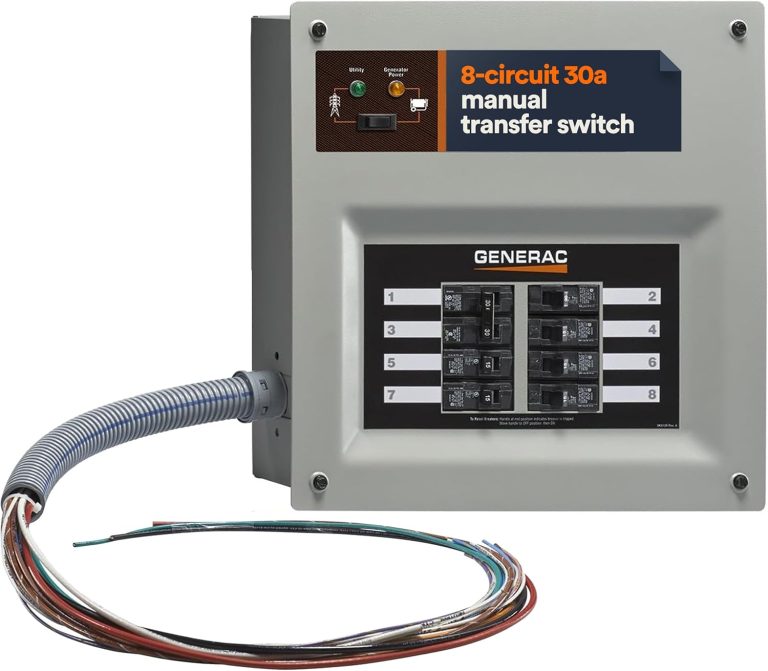
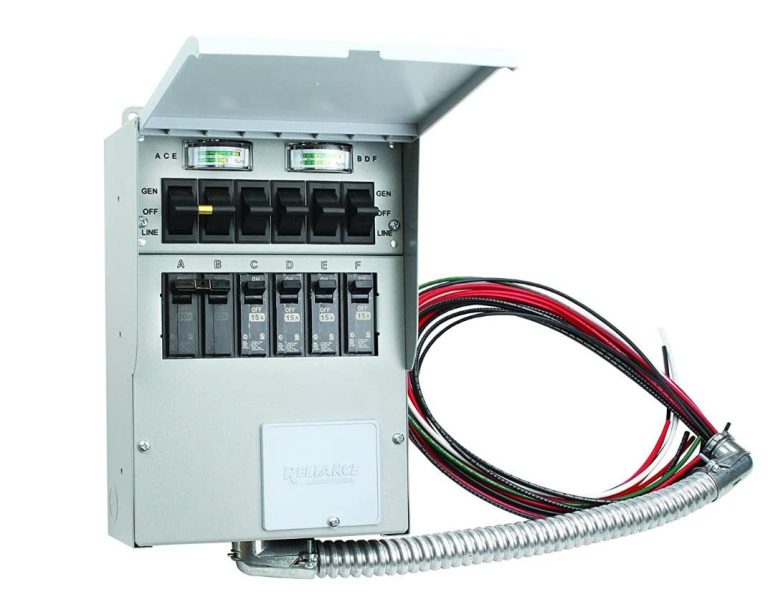
Generac’s HomeLink transfer switch is a top-tier choice with its upgradeable design—you can later convert it to an automatic standby switch. It comes with 8 circuits, expandable to 10, and includes a 10-foot cord and inlet box. The indicator lights clearly show utility or generator power, adding convenience.
Installation is best left to a licensed electrician, but the pre-wired panel simplifies the process. It’s perfect for homeowners who plan to add a standby generator later. The only downside is the 30A limit, so it’s not for whole-house power. But for essential circuits, it’s a reliable, future-proof investment.
Pros
- Upgradeable to automatic
- Trusted Generac brand
- Includes cord and inlet
Cons
- 30A limit
- Professional install recommended
- Not for whole house
Specifications
#2. EZ Generator Switch
You’ll appreciate the UL/CSA approval and patented design that make this switch a safe, reliable choice for essential loads. The push-button operation is straightforward, and it works with bonded or floating neutrals, so it’s versatile for various setups. With a 20A rating, it’s perfect for powering lights, refrigerators, or sump pumps during outages.
One caveat: it’s not a whole-house solution, so you’ll need to prioritize circuits. It’s ideal for DIYers who want a simple, code-compliant transfer without touching your main panel. If you need to power high-draw appliances like dryers, look for a higher-amp model. Overall, a solid pick for basic backup needs.
Pros
- UL/CSA approved
- Easy plug-in install
- Made in USA
Cons
- Only 20A capacity
- Limited to 120V
- Not for whole house
Specifications
#3. Nature’s Generator 50A Switch
This 50A transfer switch offers 12 circuits and supports both 120V and 240V, giving you flexibility to power high-demand appliances. It’s UL listed and comes with a CS6375 inlet and cord, simplifying installation. The steel enclosure is rugged, and you can configure circuits as twelve 120V or six 240V.
It’s designed for indoor use, so keep it protected from moisture. It’s ideal for homeowners with larger backup needs, like running a well pump and dryer simultaneously. If you have a smaller setup, the 30A version might suffice. Overall, a robust and versatile choice for serious backup power.
Pros
- High 50A capacity
- 12 circuit flexibility
- UL listed
Cons
- Indoor only
- Bulky size
- Requires professional install
Specifications
#4. MUJURUR 100A Transfer Switch
This 100A transfer switch handles up to 24000W, making it a beast for whole-house backup. The galvanized steel casing meets NEMA 3R standards, so it can withstand rain and harsh weather. With a simple lever operation and no electronics, it’s built to last over a decade without issues.
Installation requires basic electrical knowledge, and you’ll likely need a licensed electrician for safety. It’s perfect for homeowners who want to power high-demand appliances like dryers and stoves. If you’re not comfortable with wiring, skip this and hire a pro. But for those who can handle it, this switch offers excellent value and reliability.
Pros
- High 100A capacity
- Weather-resistant NEMA 3R
- Durable galvanized steel
Cons
- Requires professional install
- No automatic operation
- Bulky size
Specifications
#5. Nature’s Generator 30A Switch
This UL-listed transfer switch is pre-wired and includes a 30A inlet and cord, making installation a breeze. It supports up to 6 circuits, perfect for powering essentials like lights, fridge, and sump pump. The rugged steel enclosure and illuminated rocker switches add durability and clarity.
It’s designed for indoor use, so don’t mount it outside. It’s great for homeowners who want a safe, code-compliant solution without complex wiring. If you need more circuits, consider the 12-circuit version. Overall, a reliable choice for portable generator backup, especially for those who value simplicity and safety.
Pros
- UL listed
- Pre-wired for easy install
- Includes inlet and cord
Cons
- Indoor use only
- Only 6 circuits
- 120V only
Specifications
#6. Ketofa 63A ATS
If you want hands-free power switching, this automatic transfer switch is a game-changer. It automatically switches between utility and backup power, and the LED display shows real-time voltage and current. You can adjust over/under voltage and over-current protection to suit your needs, adding peace of mind.
However, it’s rated for 63A at 110V, so it’s not for high-power whole-house setups. It’s best for RVs, small cabins, or specific circuits. The DIN rail mount saves space, but you’ll need an enclosure for outdoor use. If you need automation and monitoring, this is a solid pick, but for basic manual switching, you might save money elsewhere.
Pros
- Automatic switching
- LED monitoring
- Adjustable protection
Cons
- Limited to 110V
- 63A max current
- Requires enclosure outdoors
Specifications
#7. DSGSANO 50A Transfer Switch
This 50A transfer switch offers a budget-friendly way to power up to 10 circuits at 240V. The wires are clearly marked, making installation easier for DIYers with basic electrical knowledge. It’s a practical choice for whole-house backup or RV setups without breaking the bank.
However, the build quality feels less robust than pricier options, and you’ll need to be comfortable with wiring. It’s not for beginners—if you’re unsure, hire an electrician. For the price, it’s a decent value, but don’t expect premium features. If you need a reliable, no-frills switch, this could work, but consider spending more for better durability.
Pros
- Affordable price
- 10 circuit support
- Clear wire markings
Cons
- Lower build quality
- Requires electrical knowledge
- No included cord
Specifications
The Real-World Guide to Choosing a Generator Transfer Switch
A transfer switch is the invisible bridge between your generator and your home’s power — and getting it wrong can mean backfeed, fried appliances, or a dangerous shock to a lineman. Unlike a generator itself, this is a safety-critical purchase you’ll live with for decades, so it deserves more than a quick glance at the first listing you see.
The Technical Details That Actually Decide Your Experience
Circuit capacity and panel space
The switch must match your home’s electrical panel amperage — typically 100 or 200 amps. Count the breaker slots you’ll need to cover essential circuits (fridge, furnace, well pump, lights). A 6-circuit switch is fine for a small cabin; a 16-circuit model is more realistic for a full house. Under-buying means you’ll be flipping breakers to decide which room loses power.
Manual vs. automatic operation
Manual switches require you to walk outside in a storm, plug in the generator, and flip a handle. Automatic models sense a utility outage, start your generator, and transfer power within seconds — but they demand a permanently installed generator and a much higher budget. Be honest about your tolerance for midnight trips in the rain.
NEMA and enclosure rating
If the switch lives outdoors, look for a NEMA 3R rating (weatherproof). Indoor-rated units (NEMA 1) are cheaper but will corrode or short if exposed to moisture. Check where your panel is mounted before you commit.
Wiring and amperage of the generator inlet
The switch must pair with a matching inlet box (typically 30-amp for portable generators, 50-amp for larger units). Mismatched plugs won’t connect, and forcing them is a fire hazard. Verify the generator’s output plug type before ordering.
Sticking to your budget
A solid manual transfer switch runs less than a full electrical panel upgrade, but installation costs vary wildly by region. Get a quote from a licensed electrician before you buy the hardware — labor can easily exceed the switch price, and DIY installation is illegal in most jurisdictions without a permit.
Traps That Turn a Smart Buy Into a Regret
- Ignoring your panel’s age — Older panels with limited breaker slots may need a sub-panel or a larger switch than you planned, adding hundreds to the project.
- Choosing by wattage alone — A 10,000-watt generator doesn’t matter if your switch only supports 7,500 watts of load. Match the switch to your essential circuits, not the generator’s max output.
- Skipping the permit — Many homeowners install a switch to save money, then fail inspection. The fine and rework cost more than hiring a pro upfront, and your insurance may not cover fire damage from unpermitted electrical work.
The Right Transfer Switch Depends on Your Setup
If you need whole-home backup with room to grow, the Generac 6853 is your best bet—its upgradeable design and 30-amp capacity suit most average houses. For pure simplicity and American craftsmanship, the EZ Generator Switch wins for plug-and-play portability. Heavy-duty users with large loads should grab the 100A double-throw, while the Nature’s Generator 50A balances circuit count and value for mid-size homes. The Pro/Tran2 50A remains the pro installer’s favorite, and the 63A DIN-rail is a niche pick for panel-mounted automation.
All seven fit under typical $200–$500 budgets, so price won’t force a compromise. Check current stock and any live deals via the buttons above before you commit—prices shift weekly.
Final 3 Picks: Upgradeability, DIY, and High Capacity
Ready to decide? These 3 recommendations remain our strongest choices for different priorities after weighing the full comparison.