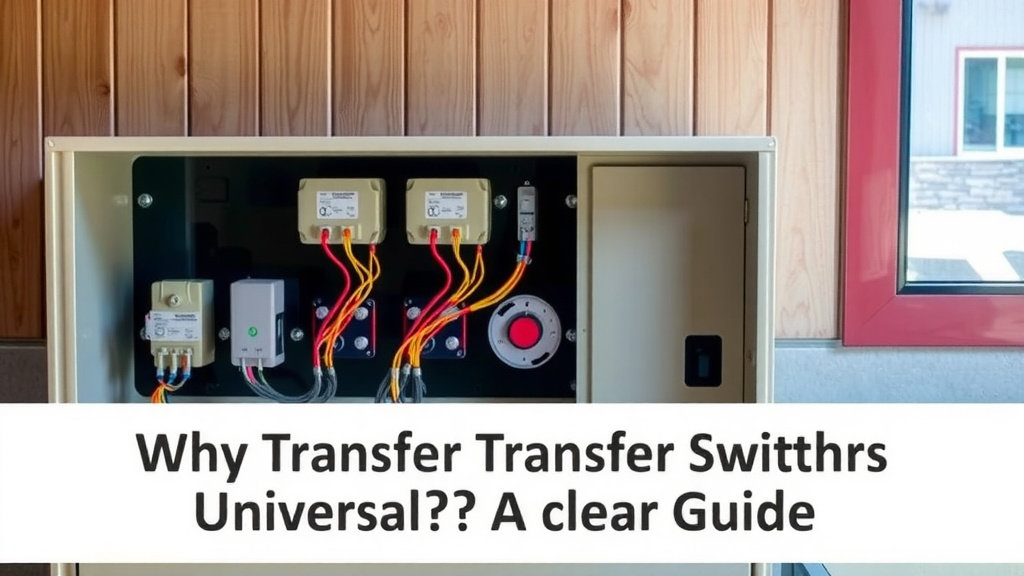
Are Generator Transfer Switches Universal? A Clear Guide
No, generator transfer switches are not universal, and you can’t just grab any switch off the shelf and expect it to work with your generator. The key issue is that plug configurations, voltage ratings, and wattage capacities vary wildly between generator brands and models. You need a switch that matches your generator’s outlet type and your home’s electrical setup to stay safe and code-compliant.
We found that most homeowners get confused here because the basic wiring concept is the same across all transfer switches, but the physical connections are not. Whether you own a portable generator or a whole-home standby unit, you’ll need to check the specific plug style, amperage, and number of circuits you want to power. Getting this wrong isn’t just frustrating — it can be dangerous if you try to force a mismatched connection.
- Transfer switches are not one-size-fits-all — they come in different amperages, voltages, and plug types.
- Portable generators typically need a manual transfer switch with the right inlet plug match.
- Standby generators use automatic switches that are usually brand-specific to the generator.
- Your home’s electrical panel determines whether you need a 30-amp or 50-amp switch.
- Hiring an electrician is often the safest route to ensure you buy the correct match.
Below, we walk you through exactly how to figure out which transfer switch works with your generator, what to check before you buy, and the mistakes to avoid. Let’s get you set up safely so you never have to worry about extension cords again.
Why Transfer Switches Aren’t One-Size-Fits-All
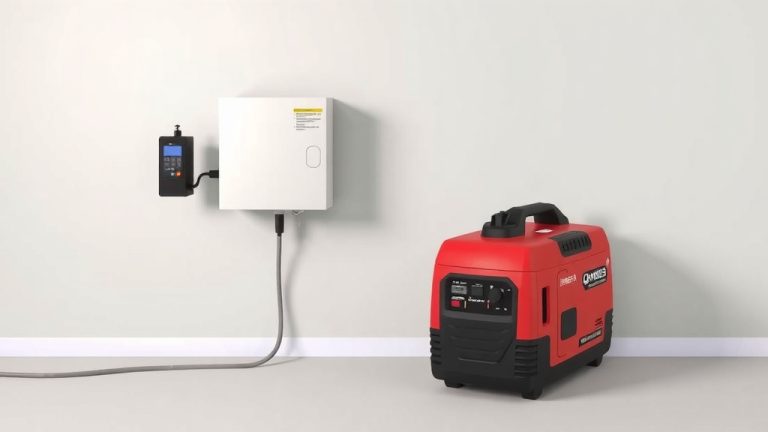
The short answer is no, and we found that understanding why makes everything else easier. A transfer switch is basically a bridge between your generator and your home’s electrical panel. Bridges come in different sizes, materials, and load limits, right? Same idea here.
Your generator produces power through specific outlets. Your home’s panel needs power through a specific inlet. The transfer switch has to connect those two specific points. If the plug shapes don’t match, or the voltage ratings don’t line up, you’ve got a safety hazard, not a solution.
Voltage and Amperage Are the Big Deciders
Most portable generators in the US run on 120V or 240V systems. Your home likely uses both. A 120V-only switch won’t power your 240V well pump or AC unit. A 240V switch might be overkill for a small apartment setup.
Amperage matters just as much. A 30-amp switch handles about 7,200 watts. A 50-amp switch handles around 12,000 watts. We found that many homeowners buy a 50-amp switch thinking bigger is better, but then their generator’s outlet is only rated for 30 amps. The physical plug won’t even fit.
Matching Your Generator’s Outlet Types
Generators come with different outlet configurations. Some have a twist-lock L14-30 outlet for 240V. Others have a straight-blade NEMA 5-20 for 120V only. The transfer switch inlet must match your generator’s outlet exactly.
You can’t use an adapter to force a mismatch. Adapters can overheat, especially under load. Many experts say that mixing plug types without proper ratings is one of the most common DIY mistakes (Consumer Product Safety Commission guidelines echo this warning).
Manual vs. Automatic Switches: The Big Brand Question
We found that the type of switch you need depends heavily on whether your generator is portable or permanently installed. These two categories work completely differently, and the universality question changes too.
Manual switches are simpler. You flip a lever or move a handle to switch between utility power and generator power. Automatic switches do this on their own when the power goes out. The technology isn’t the only difference though.
Manual Transfer Switches for Portable Generators
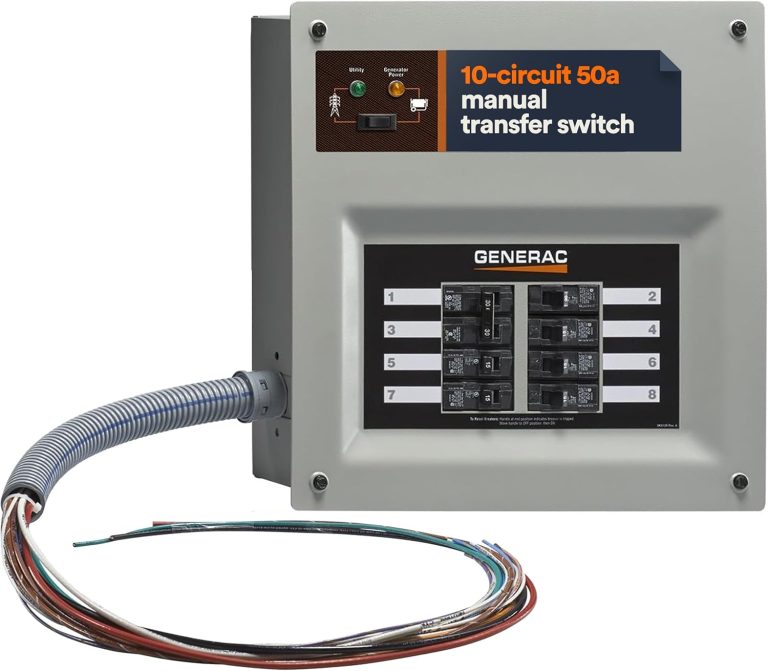
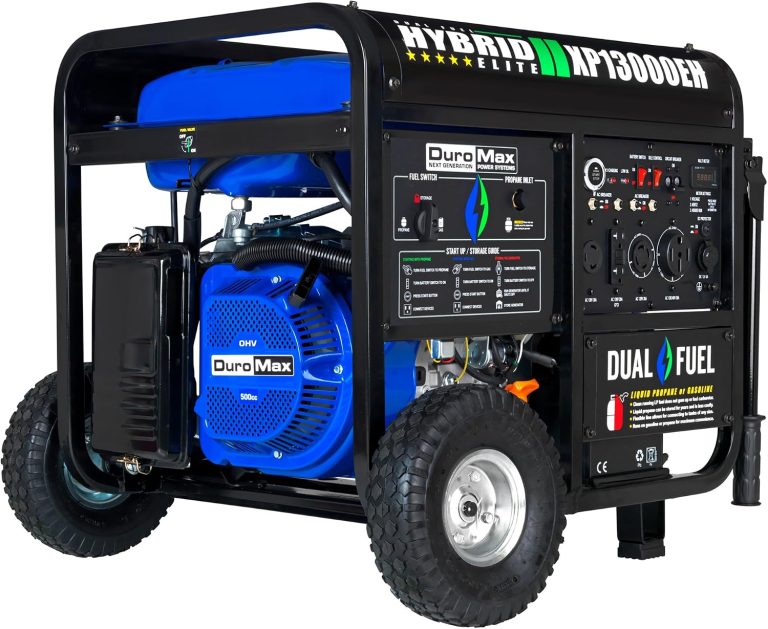
These are more universal in some ways, but not fully. The switch itself has a standard design, but the inlet box you install outside must match your generator’s plug. Many brands make manual switches that work with various generators, as long as the amperage and plug type align.
For example, a Reliance manual transfer switch with an L14-30 inlet will work with any generator that has an L14-30 outlet, regardless of brand. That’s the good news. The bad news? If your generator has a different outlet, like a 5-20 or a CS6364, you need a different inlet or a different switch.
Inlet Boxes and Generator Cords
You also need a generator cord that matches both the switch inlet and the generator outlet. A standard 30-amp cord for an L14-30 setup is common. But if your generator has a 50-amp outlet and your switch is 30-amp, you’re stuck. We found that checking the generator cord compatibility is a step many people skip, then they get hit with a return shipping fee.
Here’s a simple breakdown of common configurations we found across popular portable generators:
| Generator Outlet Type | Typical Amperage | Common Switch Inlet Match |
|---|---|---|
| L14-30 (twist lock, 240V) | 30 amps | L14-30 inlet on switch |
| L5-30 (twist lock, 120V) | 30 amps | L5-30 inlet on switch |
| 5-20 (straight blade, 120V) | 20 amps | 5-20 inlet on switch |
| 14-50 (large, 240V) | 50 amps | 14-50 inlet on switch |
This table isn’t exhaustive, but it covers the most common setups we’ve seen. If your generator doesn’t match any of these, you’ll need a custom solution or an electrician’s help.
Automatic Transfer Switches for Standby Generators
Here’s where the “not universal” rule gets strict. Automatic transfer switches (ATS) for whole-home standby generators are almost always brand-specific. Generac switches work with Generac generators. Kohler switches work with Kohler. You usually can’t mix and match.
We found that this is by design. The ATS communicates with the generator’s control board. They talk to each other to manage startup, shutdown, and fault detection. Using a different brand’s switch often breaks that communication, and the system won’t work at all.
Why Standby Systems Are Locked In
Some manufacturers say their switches are “compatible” with other brands, but the warranty often gets voided. Many electrical codes also require a listed combination, meaning the switch and generator must be tested together. We found that trying to save a few hundred dollars on a used or off-brand ATS usually ends up costing more in labor and troubleshooting.
If you already have a standby generator and need a new switch, check the model number against your generator’s manual. If you’re buying new, get both from the same dealer to ensure they’re a matched set.
Your Home’s Electrical Panel Decides the Size
Your breaker panel isn’t just a metal box. It’s a system with limits. The transfer switch you pick has to fit your panel’s capacity and your local electrical code. We found that this is where many homeowners get caught off guard.
A 30-amp switch typically powers 6 to 10 circuits. A 50-amp switch can handle 12 to 16 circuits. You can’t just pick the biggest one and hope for the best. The switch has to be rated for your panel’s main breaker size and your home’s load calculation.
Circuit Selection: What Do You Really Need?
Before buying a switch, list the circuits you want to power during an outage. Refrigerator, furnace, well pump, lights, and internet are common picks. We found that most people overestimate what they need, then realize their generator can’t handle the load anyway.
Your generator’s wattage rating is the real limit. If your generator outputs 5,000 watts, a 50-amp switch is pointless because the generator can’t feed enough power through it. A 30-amp switch with a handful of carefully chosen circuits is often the smart play.
Check Your Panel’s Space
Manual transfer switches usually need a dedicated breaker slot in your panel. Some switches are “slim” or “twin” breakers to save space, but not all panels accept them. We found that an electrician can tell you in 10 seconds whether you have room.
Standby generator ATS units often have their own internal panel, so they don’t use your main panel’s slots. That’s a plus if your panel is already packed. But the trade-off is the higher cost and the brand lock-in we mentioned earlier.
Common Mistakes People Make When Buying a Switch
We’ve seen the same errors pop up again and again in forums and on job sites. You can avoid all of them with a little homework. Here’s what to watch for so you don’t waste money or put your home at risk.
The biggest one is buying a switch before checking the generator’s outlet. The second is ignoring the cord that goes between them. The third is assuming a bigger amperage is always better. All three lead to returns, frustration, and sometimes a dangerous jerry-rigged setup.
The “It Almost Fits” Trap
Some plugs look similar but aren’t rated the same. An L14-30 and an L14-50 look alike from a distance, but the blades are different sizes. Forcing one into the other is a quick way to melt a connector or start a fire.
If a plug doesn’t slide in smoothly and lock, stop. Don’t push harder. Don’t use a wrench. Many experts say that a proper connection should click or twist with minimal effort. If you’re fighting it, you have the wrong part.
How to Verify What You Need Before You Buy
We found that a 15-minute checklist saves you hours of headache later. Grab your generator’s manual, your panel’s label, and a flashlight. Then run through these steps one by one. You’ll know exactly what to order.
This process works for both portable and standby setups. It’s the same logic an electrician uses, just simplified for a homeowner. Take your time with it.
Step-by-Step Match-Up Checklist
- Check your generator’s outlet type — look for numbers and letters like L14-30 or 5-20 printed on the receptacle.
- Confirm your generator’s wattage — the running watts, not just the surge watts, to size the switch correctly.
- Look at your home’s main breaker — the number on it (like 100 or 200 amps) tells you your panel’s limit.
- List the circuits you want to power — keep it realistic; you don’t need the AC and the water heater at once.
- Measure your panel’s open breaker slots — manual switches need one or two slots, so count what you have.
- Decide manual vs. automatic — portable generator means manual; standby generator means automatic, and brand-matched.
Once you check these six boxes, you’re 90% done. The remaining 10% is just making sure the brand of switch you pick is compatible with your panel’s make and model. Most manufacturers list this in the product specs, and many guidelines from the National Electrical Code point to using listed equipment for exactly this reason.
When to Call an Electrician Instead of DIY
We get it. You want to save money, and wiring a switch looks straightforward on YouTube. But we found that the cost of a mistake here is higher than the cost of a professional. Fires, electrocution, and voided home insurance claims are all on the table.
If you have any doubt about the voltage ratings, the plug match, or your panel’s capacity, stop and get a quote. Many electricians will do a free consultation just to look at your setup. That’s a small price for peace of mind.
Also, some local codes require a licensed electrician to install a transfer switch. Even if they don’t, your home insurance company might. Check with your provider before you start. We found that a quick phone call can save you from a denied claim later.
Conclusion
Transfer switches aren’t universal, and that’s actually a good thing once you understand why. Matching your generator’s outlet, your home’s panel capacity, and your actual power needs keeps everything safe and code-compliant. You’ve got this.
Start by checking your generator’s outlet type and wattage rating. Then count the circuits you really need during an outage. That simple checklist will point you to the right 30-amp or 50-amp switch. If anything feels off, call a licensed electrician. A quick consult costs less than a fire or a denied insurance claim.
Take the 15 minutes to verify your setup before you buy. Your future self will thank you when the lights stay on safely.
Frequently Asked Questions
Can I use any transfer switch with my portable generator?
No, you can’t use just any switch. The transfer switch inlet must match your generator’s outlet type and amperage rating. A switch with an L14-30 inlet only works with a generator that has an L14-30 outlet. Check the numbers on your generator’s receptacle first.
Will a Generac transfer switch work with a Kohler generator?
For standby systems, usually not. Automatic transfer switches are typically brand-specific because they communicate with the generator’s control board. Mixing brands often breaks that communication and voids the warranty. We found that staying with the same brand is the safest route.
Do I need a permit to install a transfer switch?
Most local building codes require a permit for transfer switch installation. Many areas also require a licensed electrician to do the work. You should check with your local building department and your home insurance provider before starting. We found that a quick phone call can save you from headaches later.
Can a bigger amp transfer switch handle a smaller generator?
The switch won’t hurt the generator, but it won’t help either. A 50-amp switch with a 30-amp generator just means the switch is rated for more power than you can feed it. The physical plug won’t fit anyway, since the generator outlet size is different. Always match the switch to your generator’s actual output.
What happens if I use an adapter to connect mismatched plugs?
Don’t do it. Adapters can overheat under load, especially when you’re pulling steady power during an outage. The connection wasn’t designed for that current flow, and it’s a fire risk. We found that forcing a mismatch is one of the most dangerous DIY mistakes you can make.