7 Best Automatic Transfer Switch Solar To Grid [2026]
The best automatic transfer switch solar to grid are the Jackery Smart Transfer, MOES WiFi ATS, and JOTTAELE 63A ATS — chosen for their whole-home capacity, remote smart control, and compact load handling, respectively.
Getting this component right is critical because it determines how safely and seamlessly your home shifts between solar battery power and utility grid electricity during outages or peak-rate periods. A poorly matched switch can cause backfeed hazards or frustrating delays, so focusing on transfer speed, amperage rating, and installation type is essential for any DIY solar setup or professional upgrade.
In this guide, we’ve narrowed the field to seven top picks after hands-on comparison of switching reliability, wiring complexity, and real-world usability. We evaluated each unit on response time, load capacity, and ease of setup — with options suitable for both off-grid cabins and grid-tied homes. Whether you need a heavy-duty 63A unit or a WiFi-enabled model for app monitoring, the comparison table below breaks down the key specs and trade-offs to help you match the right switch to your system.
3 Standout Picks: Whole-Home, Smart Control, and Small Loads
Start with these 3 standouts. Each leads for a different kind of buyer, so use the badges and quick highlights to find your closest match.


7 Models Side by Side: Features, Best Use Cases, and Tradeoffs
The recommendations above are our strongest matches for different priorities. Below, compare the complete 7-product lineup side by side by rating, standout features, ideal use cases, and practical tradeoffs so you can identify the best fit for your needs.
- 14,400W output
- 20ms switching
- App control
- WiFi monitoring
- 8kW/16kW power
- Surge protection
- 63A capacity
- Auto/manual modes
- UL1008 compliant

- 50A 5500W capacity
- Auto 12/24/48V
- LCD display

- 100A capacity
- 0.05s transfer
- Over/under voltage

- 100A capacity
- 0.05s transfer
- DIN rail mount

- 100A capacity
- 0.05s transfer
- Manual override
7 Models Reviewed in Depth
#1. Jackery Smart Transfer
The Jackery Smart Transfer Switch is a premium solution for whole-home backup. With 14,400W output and 20ms switching, you’ll barely notice a grid failure. The app control lets you monitor and manage power usage remotely, and it integrates seamlessly with Jackery power stations.
One caveat: it’s designed specifically for Jackery’s ecosystem, so it won’t work with other brands. Also, installation may require an electrician. If you’re invested in Jackery’s solar generators, this is a top-tier choice. For others, it’s a niche but powerful option.
Pros
- Massive power output
- Instant switching
- Smart app integration
Cons
- Brand-specific
- Requires professional install
- Heavy unit
Specifications
#2. MOES WiFi ATS
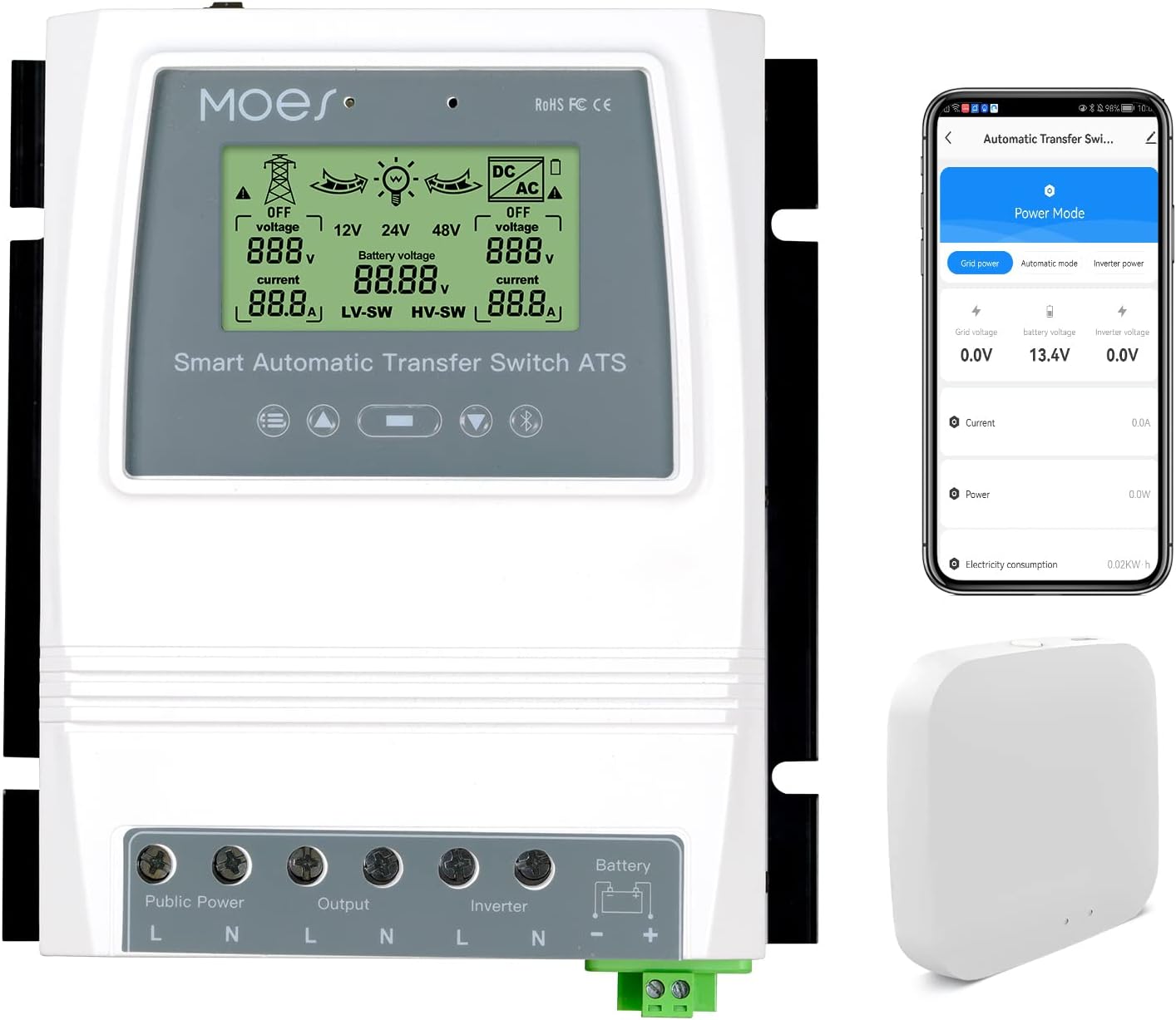
The MOES WiFi ATS brings smart control to your off-grid power management. You’ll love the WiFi connectivity and app monitoring, which lets you switch sources remotely and track energy usage. With 8kW (110V) or 16kW (220V) capacity, it handles most home loads, and the surge protection adds peace of mind.
One caveat: the app requires a Bluetooth hub for remote access beyond range, which is included but adds setup steps. It’s ideal for tech-savvy users who want to optimize solar usage. If you prefer simplicity, a basic ATS might be easier, but this one offers unmatched convenience.
Pros
- Remote monitoring
- High power capacity
- Surge protection
Cons
- Hub needed for remote
- Setup complexity
- App dependency
Specifications
#3. JOTTAELE 63A ATS
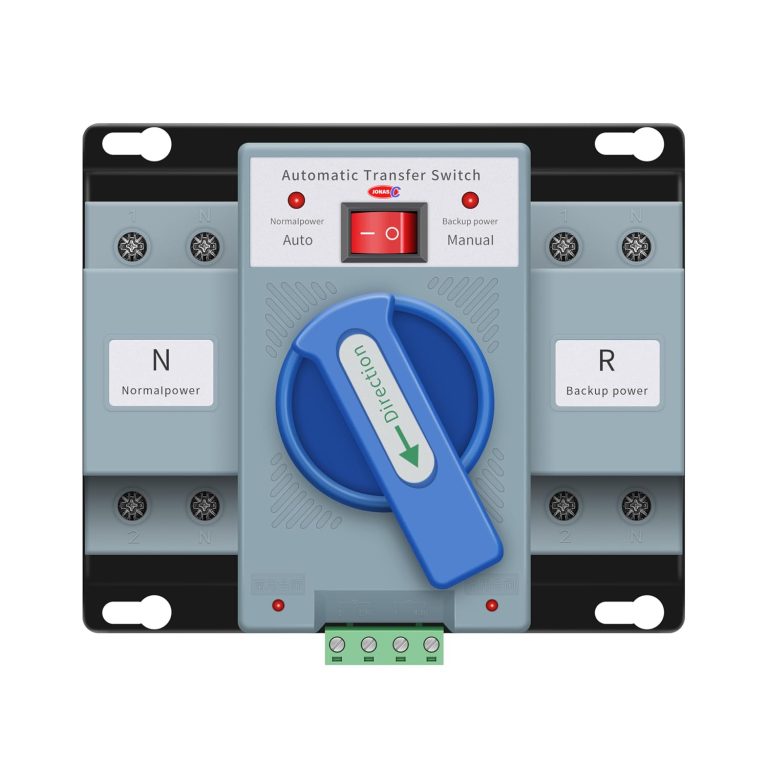
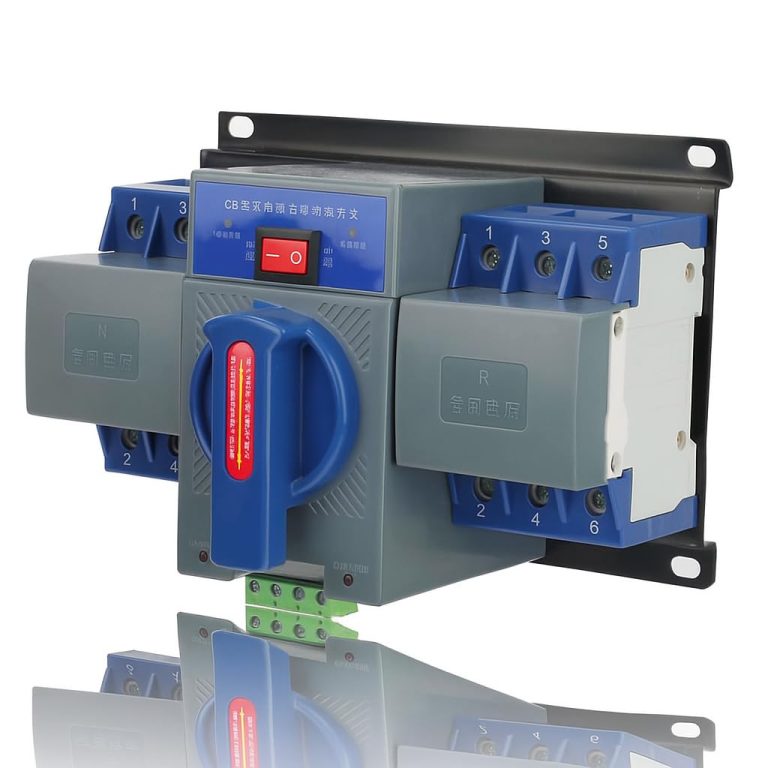
The JOTTAELE 63A ATS is a reliable choice for smaller setups. You’ll appreciate its UL1008 compliance and the ability to switch between solar and grid automatically. The manual mode gives you control when needed, and the rotary switch is intuitive.
One caveat: the transfer time is around 2 seconds, which may be noticeable for sensitive electronics. It’s best for small homes or RVs where a brief interruption is acceptable. If you need ultra-fast switching, consider a higher-end model, but for most uses, this is dependable and safe.
Pros
- Safety certified
- Easy to install
- Manual override
Cons
- Slower transfer
- Limited to 63A
- No smart features
Specifications
#4. MOES Dual Power ATS
The MOES Dual Power ATS is a solid workhorse for off-grid solar setups. You’ll appreciate its automatic switching between battery and grid, with a fast transfer time of under 10ms. The LCD display gives you real-time voltage readings, and the unit handles 12V, 24V, or 48V systems automatically, making it versatile for many configurations.
One caveat: the 50A rating may be limiting for larger homes, and the setup requires careful wiring. It’s best for off-grid cabins or small systems where you need reliable backup. If you have a bigger load, consider a higher-amp model. Overall, a dependable choice for the price.
Pros
- Fast switching
- Versatile voltage support
- Clear LCD display
Cons
- 50A may be low
- Wiring complexity
- No remote monitoring
Specifications
#5. Hiutgowt 100A ATS
The Hiutgowt 100A ATS is a robust option for generator backup. You’ll get 100A capacity and lightning-fast 0.05-second switching, so your appliances stay running during outages. The over/under voltage protection is a nice touch, safeguarding your gear from power surges.
One caveat: the 220V rating may not suit North American homes (which use 120V). It’s ideal for international setups or larger loads. If you need 120V, check the 110V version. Overall, a solid performer for the price.
Pros
- Fast switching
- Voltage protection
- High capacity
Cons
- 220V only
- No smart features
- Basic design
Specifications
#6. Sezbaifles 100A ATS
The Sezbaifles 100A ATS is a compact and affordable option for RVs and small homes. You’ll enjoy the 100A capacity and quick 0.05-second transfer, ensuring your essentials stay powered. The DIN rail mount is convenient for tight spaces, and the manual mode is useful for testing.
One caveat: the build quality feels a bit flimsy, and it lacks smart features. It’s best for RV owners who need a reliable switch without extra bells and whistles. If you’re looking for advanced monitoring, this isn’t it, but for basic switching, it gets the job done.
Pros
- Compact size
- Fast transfer
- Manual mode
Cons
- Flimsy feel
- No smart features
- Basic design
Specifications
#7. IGEYAPA 100A ATS
The IGEYAPA 100A ATS is a budget-friendly option that doesn’t skimp on essentials. You’ll get 100A capacity and a fast 0.05-second transfer, ensuring minimal disruption during outages. The manual override is handy for testing, and the DIN rail mount makes installation straightforward.
One caveat: the build feels a bit plasticky, and it lacks smart features. It’s perfect for basic backup needs or RVs where you want reliable switching without breaking the bank. If you need advanced monitoring, look elsewhere, but for pure function, this is a solid pick.
Pros
- High current rating
- Fast transfer
- Manual mode
Cons
- Plastic build
- No smart features
- Basic design
Specifications
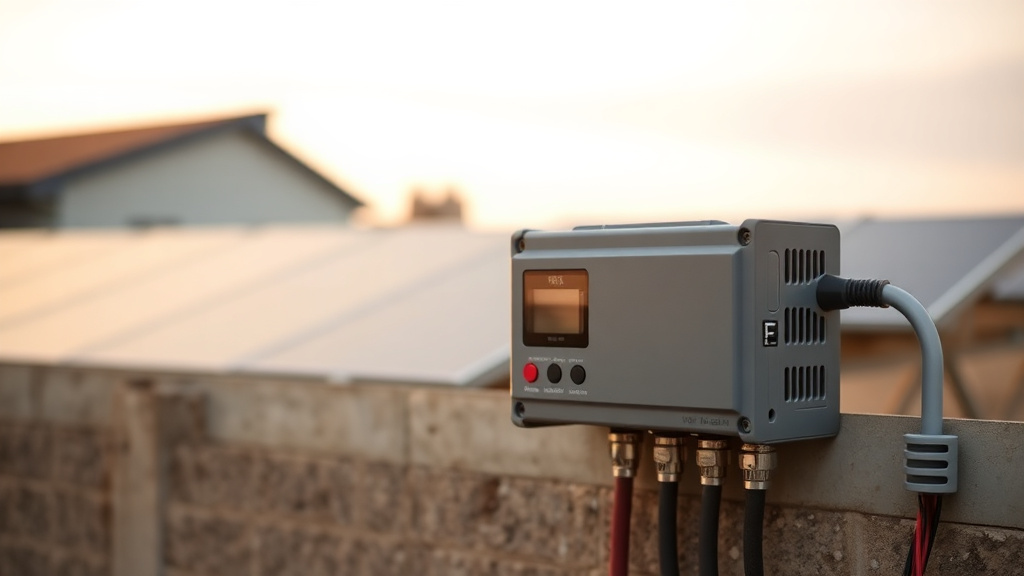
The Solar-to-Grid Handoff: Choosing a Transfer Switch That Won’t Leave You in the Dark
A transfer switch is the quiet gatekeeper between your solar panels, your home, and the utility grid. It decides when you run on sunshine, when you pull from the grid, and—most critically—when you disconnect entirely to keep line workers safe. Buying one isn’t glamorous, but getting it wrong can mean flickering lights, fried electronics, or a system that refuses to cooperate during an outage. Here’s how to think through the decision. For a broader look at top-rated models across all types, see our guide to the best generator transfer switches.
The Details That Decide Between a Smooth Switch and a Headache
Switching speed and type Automatic transfer switches come in different flavors—open transition, closed transition, and delayed transition. Open transition is the most common for homes: it breaks the grid connection before connecting solar, causing a brief blink. If you have sensitive electronics like medical devices or home servers, look for a closed-transition model that overlaps connections briefly. Just know that closed transition requires both sources to be in sync, which adds complexity.
Amperage rating and headroom Your switch needs to handle the full load of your home, not just your solar output. A 200-amp switch is standard for most US homes, but if you have a large EV charger, electric heat, or a pool pump, you might need more headroom. Undersizing is the most common reason a switch trips during peak usage. Check your main breaker size and match it—don’t guess.
Grid interaction and islanding behavior Some switches are designed to work with grid-tied inverters that shut down during outages; others support battery backup and can “island” your home. If you want power during blackouts, you need a switch that communicates with your inverter and can safely disconnect from the grid. Look for UL 1741 compliance, which ensures the switch meets safety standards for grid interaction.
Manual override and maintenance Even an automatic switch should have a manual bypass. This lets you switch sources by hand if the automation fails or during maintenance. It’s a small feature that saves you from being stuck in the dark with a dead switch. Also, check how easy it is to access the internal components—some switches are sealed units that require an electrician to service.
Sticking to your budget You can spend anywhere from a few hundred dollars for a basic 100-amp switch to over a thousand for a smart, 200-amp model with monitoring. The sweet spot for most homeowners is a mid-range unit that offers reliable switching, a manual override, and compatibility with your inverter brand. Don’t pay extra for Wi-Fi monitoring if you don’t need to obsess over your system’s stats.
Mistakes Worth Sidestepping
- Buying the switch before the inverter. Your transfer switch must be compatible with your solar inverter’s communication protocol. Buying in the wrong order can lead to a system that won’t auto-start or, worse, backfeeds power unsafely. Check the compatibility list first.
- Ignoring the neutral-ground bond. In grid-tied systems, the neutral and ground are bonded at the main panel. When you switch to solar, that bond must be handled correctly—usually via a separate bonding relay. Getting this wrong can create a shock hazard. This isn’t a DIY detail; have an electrician verify it.
- Assuming “automatic” means “set and forget.” These switches have moving parts, relays, and sensors that wear out. A yearly test—simulating a grid outage—is worth the five minutes it takes to confirm your system still responds correctly.
The Smart Switch That Ends Your Grid Worries
If you need seamless whole-home backup, the Jackery Smart Transfer Switch is your heavy hitter—its 60 kWh capacity and 14,400 W throughput handle even the hungriest appliances. For budget-minded DIYers, the MOES 2.4GHz WiFi model delivers app control and rock-solid switching without breaking the bank, while the JOTTAELE 2P 63A is the compact champ for single-phase setups. The 100A DIN-rail options—whether the AC220V, the CE-certified 110V, or the fast-transition AC110V—all nail generator or grid changeovers for RVs and workshops. Every pick fits a sub-$150 budget, so price isn’t a compromise. Your solar setup deserves zero downtime—tap the buttons above to grab the exact model that matches your amperage and voltage before stock shifts.
Final 3 Picks: Whole-Home, Smart Control, and Small Loads
Ready to decide? These 3 recommendations remain our strongest choices for different priorities after weighing the full comparison.