Power Output 101: How Many Kilowatts Does a Solar Panel Generate?
Have you ever looked up at your rooftop and wondered just how much electricity those shiny solar panels could actually produce? You’re not alone. Understanding solar power output is one of the most common questions homeowners ask when considering a switch to renewable energy. The truth is, the answer isn’t quite as straightforward as you might think, but don’t worry—I’m here to break it down into digestible pieces.
Understanding the Basics: What Does Kilowatt Really Mean?
Before we dive into specific numbers, let’s establish a foundation. A kilowatt, or kW, is simply a unit of power equal to 1,000 watts. Think of it like this: if a watt is a single drop of water, a kilowatt is an entire bucket. When we talk about solar panel output, we’re typically discussing how many kilowatts of electricity a panel can generate under ideal conditions. This is called the panel’s rated capacity or nameplate capacity.
Now here’s where it gets interesting. Most residential solar panels you’ll see today don’t operate at their maximum capacity all the time. Why? Because perfect conditions—full sunshine, cool temperatures, zero shade—don’t exist 24/7. Your actual output will vary based on weather, time of day, season, and your geographic location.
The Standard Solar Panel: How Much Power Does It Generate?
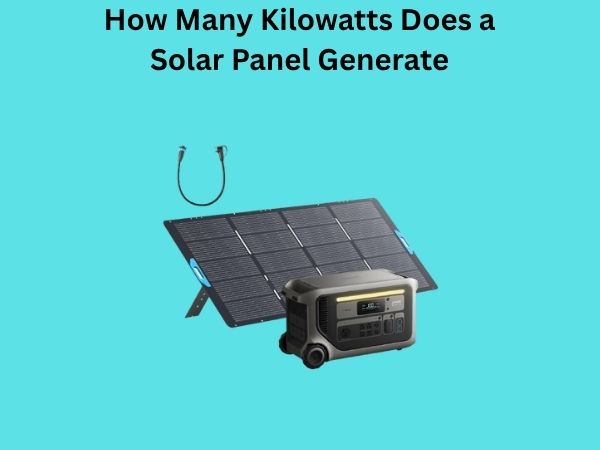
Let’s talk about what you’ll actually find on the market. A typical modern residential solar panel ranges from 300 to 400 watts in rated capacity. Yes, you read that right—we’re talking about watts, not kilowatts, for individual panels. To convert this to kilowatts, you’d divide by 1,000, giving you 0.3 to 0.4 kW per panel.
I know what you’re thinking: “That doesn’t sound like much.” And honestly, a single panel isn’t designed to power your entire house. That’s why most residential installations include multiple panels working together. If you install a typical 10-panel system, you’d have somewhere between 3 to 4 kilowatts of total capacity. For larger homes or those wanting to maximize energy independence, systems can include 20, 30, or even more panels.
Why the Range? Understanding Panel Specifications
You might be wondering why solar panels don’t all have the same wattage. The answer lies in manufacturing differences, efficiency ratings, and technological advancement. More efficient panels, which convert sunlight into electricity more effectively, tend to have higher wattage ratings. Premium brands and newer technologies often outperform budget options.
The wattage rating you see on a panel’s specification sheet is determined under Standard Test Conditions (STC). These are laboratory conditions that include 1,000 watts per square meter of sunlight intensity, a cell temperature of 25°C (77°F), and an air mass of 1.5. In real-world situations, your panels will rarely hit these exact conditions, which is why actual output typically falls 15 to 25 percent below the rated capacity.
Real-World Output: What You’ll Actually Generate
Here’s the practical part that matters to your electricity bills. When your solar panels are actually installed on your roof, they’ll generate less power than their rated capacity. This is perfectly normal and expected. Several factors influence your real-world output.
Weather Conditions and Seasonality
Cloudy days are the enemy of solar productivity. On an overcast day, your panels might operate at just 10 to 25 percent of their rated capacity. That’s a significant drop! Seasons also play a major role. In summer, you’ll get longer days and more intense sunlight, pushing output closer to maximum capacity. Winter brings shorter days and lower sun angles, reducing output considerably.
If you live in a sunny region like Arizona or Southern California, you’ll naturally see higher annual output. Conversely, if you’re in a cloudier climate like the Pacific Northwest or Northeast, your systems will produce less overall energy, though they’re still worthwhile investments.
Temperature Effects
Here’s something that surprises many people: solar panels actually work better when they’re cooler. When panels get hot, their efficiency drops. On a scorching 95°F day, your panels might perform worse than on a crisp 70°F day with the same amount of sunlight. This is counterintuitive, I know. The heat reduces the voltage output of the cells, which means less electricity flows to your inverter and into your home.
Shading and Obstructions
Even partial shade can dramatically reduce your system’s output. If a tree branch casts a shadow across just one panel in a string of panels, it can affect the performance of the entire string. This is why solar installers carefully assess your roof’s shade patterns throughout the year before recommending panel placement.
Panel Angle and Orientation
The direction your panels face matters significantly. South-facing panels (in the Northern Hemisphere) generally capture the most sunlight throughout the year. East or west-facing installations will generate less overall energy. The tilt angle also influences output—panels should ideally be angled to match your latitude for optimal year-round performance, though many systems aim for a compromise that works well across all seasons.
Calculating Your Potential Solar Output
Want to estimate how much energy your system might produce? Here’s a simplified approach. Start with your system’s rated capacity in kilowatts. Then multiply by a capacity factor that reflects your location’s solar resources and conditions. Most residential systems have capacity factors between 15 and 25 percent.
For example, if you have a 5 kW system in an area with a 20 percent capacity factor, your expected annual output would be approximately 8,760 hours per year (hours in a year) multiplied by 5 kW multiplied by 20 percent, which equals about 8,760 kWh annually. That’s enough to power the average American household, which uses around 10,500 kWh per year.
Using Online Tools and Professional Assessments
Rather than doing manual calculations, you can use online solar calculators that take your address into account. These tools use satellite imagery and historical weather data to provide fairly accurate estimates. Even better, working with a professional solar installer means they’ll conduct a thorough site assessment, analyzing your roof’s exposure, shade patterns, and structural integrity to give you precise projections.
System Size: How Many Kilowatts Do You Need?
Understanding panel output is only half the battle. You also need to figure out how large a system you need. This depends on your electricity consumption and goals. Some people want to generate 100 percent of their electricity from solar, while others are content offsetting a portion.
Assessing Your Energy Needs
Look at your electricity bills from the past 12 months. Find your annual kilowatt-hour consumption. Let’s say you use 12,000 kWh per year. If you want to offset this entirely and you’re in an area with a 20 percent capacity factor, you’d need a system rated at approximately 6.8 kW. That typically translates to about 17 to 23 solar panels, depending on individual panel wattage.
Accounting for System Losses
Real-world systems don’t convert 100 percent of the solar energy into usable electricity. There are losses from the inverter (which converts DC electricity from panels to AC electricity for your home), wiring, and other equipment. Typically, you’ll lose about 10 to 20 percent of your potential output to these system losses. Professional installers account for this when sizing your system.
The Role of Inverters in Maximizing Output
I can’t discuss kilowatt output without mentioning inverters. This device is the middleman between your solar panels and your home’s electrical system. Inverters convert the direct current (DC) electricity produced by panels into alternating current (AC) electricity that your appliances use.
The inverter you choose affects how much of your panels’ output you actually capture. High-quality inverters operate at 95 to 98 percent efficiency, while budget options might be closer to 90 percent. Over a system’s 25-year lifespan, that difference in efficiency can mean thousands of dollars in lost energy production.
String Inverters vs. Microinverters
String inverters handle the output from multiple panels connected in series. They’re typically more affordable and suitable for systems without significant shading issues. Microinverters, placed on individual panels, offer better performance in partially shaded situations and allow for more granular monitoring. They cost more upfront but can maximize output in complex roof configurations.
Monitoring Your Solar Output
Once your system is installed, you can monitor its kilowatt output in real time through apps and web portals provided by your inverter manufacturer. This lets you see exactly how much electricity your panels are generating at any moment. Most modern systems provide alerts if output drops unexpectedly, helping you catch maintenance issues early.
Understanding Daily Output Variations
Your system’s output will follow a predictable bell curve throughout the day. Morning and evening produce minimal output as the sun is low on the horizon. Midday, when the sun is highest, you’ll hit peak output. On a clear day, you might see your system’s rated capacity approached during the afternoon hours. On cloudy days, output remains relatively flat and low throughout the day.
Battery Storage and Maximizing Your Solar Investment
Generating kilowatts of solar power is great, but what happens when the sun sets? This is where battery storage comes in. Adding a battery system lets you store excess daytime generation for use at night, maximizing the value of every kilowatt your panels produce.
Popular battery options like Tesla Powerwall or LG Chem systems store 10 to 15 kWh of electricity. If your 5 kW solar system generates 25 kWh on a sunny day, you might store 10 to 15 kWh in a battery and use the rest in real time, then draw from the battery in the evening. This approach significantly increases your energy independence.
Comparing Solar Output to Traditional Energy
To put solar output in perspective, let’s compare it to other energy sources. The average fossil fuel power plant generates hundreds of megawatts (thousands of times larger than your rooftop system). But here’s the beautiful part: thousands of homeowners with solar systems collectively generate enormous amounts of electricity, supporting the grid while reducing reliance on polluting power plants.
Your 5 kW system produces roughly the equivalent of the electricity generated by burning 5,000 pounds of coal annually. Over 25 years, that’s 125,000 pounds of coal equivalent avoided. Beyond kilowatts and environmental impact, solar panels increase home value, provide energy independence, and lock in predictable electricity costs.
Future Improvements in Solar Panel Output
Solar technology continues evolving rapidly. Newer panel designs promise efficiency improvements from the current 15 to 22 percent to potentially 25 to 30 percent within the next few years. This means future panels will generate more kilowatts from the same roof space. Perovskite solar cells, tandem cell designs, and other innovations are in development, offering exciting possibilities.
What This Means for New Installations
If you’re considering solar, you might wonder whether to wait for better technology. However, the efficiency gains in next-generation panels don’t necessarily mean you should delay. A 5 kW system installed today will generate tremendous savings over 25 years, and the benefits begin immediately. Plus, newer panels becoming available gives you flexibility if you expand your system later.
Regional Variations in Solar Output
Your geographic location dramatically influences how many kilowatts your system effectively generates. Let me break down some examples.
- Arizona and Southern Nevada experience 5 to 6 peak sun hours daily, resulting in excellent output
- Southern California and parts of Texas average 4.5 to 5.5 peak sun hours
- Northern climates and cloudier regions might see only 3 to 4 peak sun hours daily
- Even within states, variations can be significant due to local weather patterns
Peak sun hours represent the equivalent hours per day of peak sunlight intensity (1,000 watts per square meter). This metric helps standardize output comparisons across regions.
Making Your Solar Investment Decision
Now that you understand how kilowatts work in the context of solar panels, you’re equipped to make an informed decision. Consider your location’s solar potential, your electricity consumption, available roof space, and budget. Request quotes from multiple installers—they’ll provide detailed analyses of your specific situation, including projected kilowatt output and financial returns.
The average American residential solar system—around 5 to 6 kW—produces enough electricity to offset most household consumption. Your specific output will depend on all the factors we’ve discussed, but one thing is certain: solar technology has become increasingly practical and cost-effective for nearly every homeowner.
Conclusion
So, how many kilowatts does a solar panel generate? A typical residential panel produces 0.3 to 0.4 kW at its rated capacity, though real-world output varies based on weather, location, temperature, and installation factors. Most home systems range from 3 to 10 kW total capacity, generating between 8,000 and 30,000 kWh annually depending on these variables.
The beauty of solar power is that it doesn’t require perfection—just consistent sunlight. Even in less-than-ideal climates, modern solar systems generate substantial electricity while reducing environmental impact and energy costs. Whether you’re generating 3 kilowatts or 10, every watt of solar power offsets electricity that would otherwise come from traditional power sources.
If you’re serious about understanding your specific solar potential, reach out to local installers for professional assessments. They’ll measure your roof’s solar exposure, analyze shading, calculate realistic output projections, and help you design a system tailored to your needs. The path to energy independence and lower electricity bills starts with understanding your solar output potential.
Frequently Asked Questions
What’s the difference between kilowatts (kW) and kilowatt-hours (kWh)?
Kilowatts measure power capacity at a specific moment—how much electricity a panel can produce right now. Kilowatt-hours measure energy production over time. If your 5 kW system runs at full capacity for one hour, it generates 5 kWh. Over a day, month, or year, kWh is what appears on your electricity bill and what determines your actual electricity generation and savings.
How does temperature affect solar panel kilowatt output?
Solar panels actually lose efficiency as they heat up. For every degree Celsius above 25°C (77°F), panel output decreases by about 0.4 to 0.5 percent. A panel reaching 60°C (140°F) on a hot summer day might operate at 15 percent lower output compared to a cool day at the same sun intensity. This is why cooler climates sometimes see surprisingly good annual output despite fewer peak sun hours.
Can I increase my solar panel kilowatt output after installation?
Yes, you can expand your system by adding more panels if your roof has space and your electrical infrastructure supports it. Many homeowners start with a smaller system and expand later. However, adding panels to an existing system sometimes requires upgrading the inverter and electrical components, so expansion costs aren’t purely about panel price. Planning for future expansion during initial installation is wise.
Why do solar companies give different kilowatt output estimates?
Different installers may use different methodologies, local weather data sources, or assumptions about system losses and efficiency. Some might use conservative estimates while others are more optimistic. This is why getting multiple quotes is important—you’ll see different projections and can ask installers to explain their calculations. Professional estimates should be fairly close if based on proper site assessments