Generator Interlock vs Manual Transfer Switch Guide
A generator interlock is safer, simpler, and much cheaper than a manual transfer switch, but it only works if you can safely use a cord-connected portable generator. If you need a hardwired generator or want automatic safety features, a manual transfer switch is the better choice. Ultimately, a manual transfer switch offers more protection for your home and electrical system, but the interlock is a reliable, budget-conscious option for many homeowners.
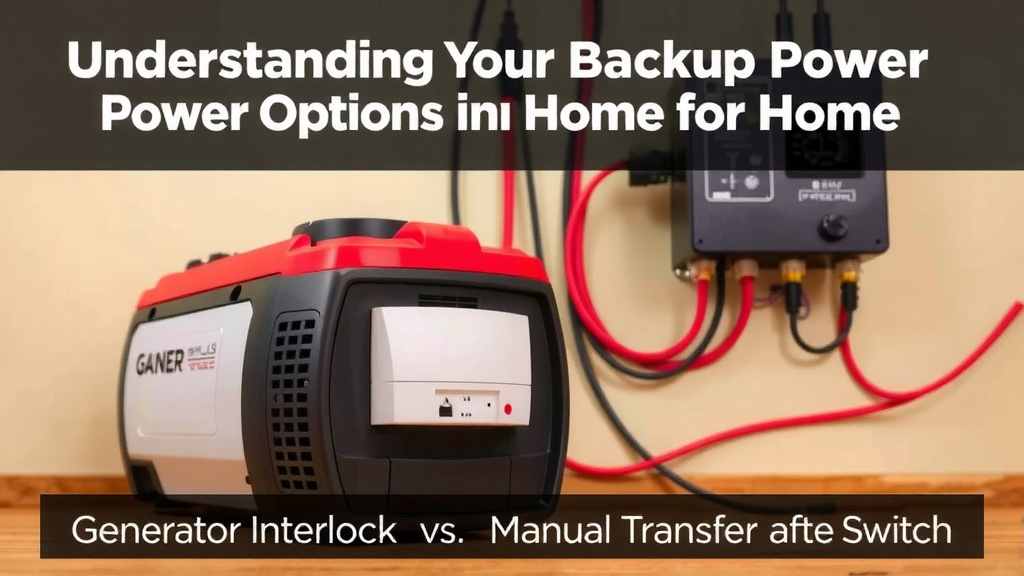
The choice comes down to how you power your home during an outage, your budget, and your comfort with electrical work. We found that an interlock kit is a simple metal bracket that prevents your main breaker and generator breaker from being on at the same time. A manual transfer switch is a separate electrical panel that physically isolates your home from the grid. Both meet electrical code in most areas, but they do the job in very different ways. Your safety and your home’s wiring are the top priorities here.
- Safety: Both prevent backfeeding, but a transfer switch is more foolproof.
- Cost: An interlock kit is dramatically cheaper, often under $100.
- Installation: Interlocks are easier for a DIYer, but a transfer switch needs more wiring skill.
- Power: A transfer switch lets you power hardwired appliances like a furnace.
- Convenience: A portable generator connects to an interlock with a cord; a transfer switch can be wired directly.
Below, we break down exactly how each system works, what they cost, and which one is right for your home setup. Let’s walk through the pros and cons so you can make a safe, smart choice.
Understanding Your Backup Power Options at Home
When the power goes out, you want heat, food in the fridge, and lights on. We found that most homeowners have two solid paths to get there: a generator interlock kit or a manual transfer switch. Both are safe when installed right. Both keep you from accidentally sending power back to the grid and harming a lineman. The trick is knowing which one fits your home and your skill level.
Think of it like choosing between a manual transmission and an automatic car. Both get you where you need to go. One takes a little more focus from you. The other just works with a flip of a switch. Let’s walk through each system so you can see which feels like the right fit for your house.
The Core Setup of an Interlock Kit
An interlock kit uses a simple sliding metal bracket over your main breaker and a new generator breaker. You physically slide the bracket to shut off the main breaker before you can turn on the generator breaker. This forces you to disconnect from the grid before powering your house.
You plug your portable generator into a special inlet box outside the home with a heavy-duty cord. From there, power flows through the generator breaker to your whole panel. That means every circuit in your home has power, not just the ones you picked ahead of time. But it also means you have to be smart about what you run at once. A 5,000-watt generator won’t power your AC, electric oven, and dryer all at the same time.
Why the Bracket Works So Well for Budgets
We found that the cost difference is honestly hard to ignore. An interlock kit is a stamped piece of metal with a few screws. Many kits sell for under $100. Add in the inlet box and the cord, and you are still well under $300 for the complete setup. That leaves room in your budget for a better portable generator.
The installation is also friendly for a confident DIYer. If you can safely work inside a main panel and follow the National Electrical Code, you can do this in an afternoon. Many experts say this is the most affordable way to get a legal, safe generator hookup in your home.
How a Manual Transfer Switch Operates
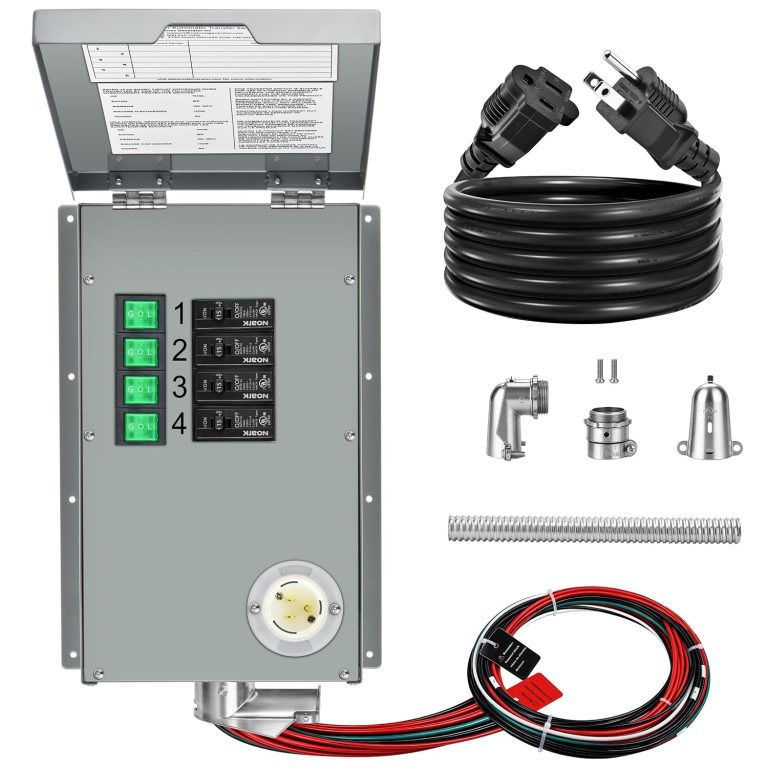
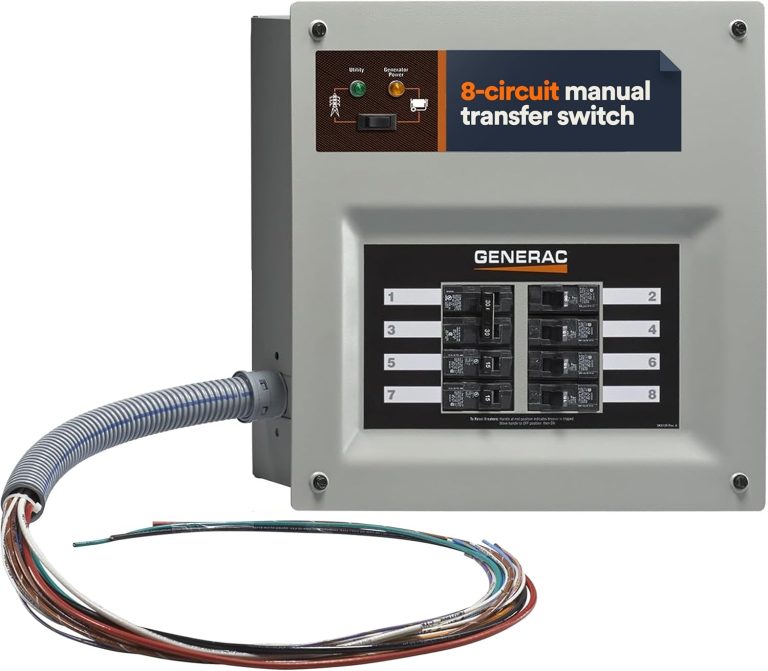
A manual transfer switch is a separate small panel mounted next to your main electrical panel. You choose a few critical circuits during installation, like the furnace, well pump, and refrigerator. These circuits get moved into the transfer switch. When the power goes out, you flip the main breaker off, start the generator, and flip the transfer switch to “Generator.”
This isolates your chosen circuits from the grid completely. There is no mechanical bracket to slide. There is no risk of accidentally turning the wrong breaker on. It is a dedicated system designed for one job. You physically move power from the utility to your generator in a few simple steps.
This setup is more like a hard-wired solution. You do not need to plug a cord into an inlet box outside. The generator plugs directly into the transfer switch with a twist-lock connection. That removes a step and a potential point of failure from the process.
When the Higher Price Makes Sense
Yes, a manual transfer switch costs more. You are looking at $300 to $600 for the switch itself, plus professional installation if you do not have strong electrical skills. That puts most installs in the $800 to $1,500 range. But you get something for that money: absolute clarity and peace of mind.
You also get the ability to power hardwired appliances. A generator interlock forces you to plug things in. But a furnace, a well pump, or a septic system is wired directly into your panel. You cannot power them with an extension cord. If you rely on one of those systems, the transfer switch is your only safe option.
Safety and Code Compliance for Each Method
Both systems are legal and code-compliant when installed correctly. The National Electrical Code allows both approaches. But the safety story is different for each one. We found that a transfer switch is considered more foolproof by electricians.
An interlock relies on you to perform steps in the right order. You must slide the bracket and shut off the main breaker every single time. Do that consistently, and you are totally safe. Forget once, and you have a serious backfeeding risk. Many guidelines point to the simple mechanical design of a transfer switch as the safest option (National Electrical Code).
Backfeeding Risks with a Portable Generator
Backfeeding happens when power flows from your generator into the utility lines outside. That is dangerous for anyone working on the power lines. It can also fry your generator when the power comes back on. We found that both systems prevent this, but they do it differently.
The interlock makes backfeeding physically impossible when the bracket is in place. You cannot turn on the generator breaker while the main breaker is on. That is a great safety feature for a low price. The transfer switch does the same job, but it uses a mechanical switch to break the connection. There is no way to have both power sources connected at once.
Foolproof Operation vs. Attentive Operation
A manual transfer switch is closer to foolproof. You flip a lever, and you are done. There is no sequence to remember. The switch itself handles the isolation. That makes it a great choice for households with multiple people who might need to start the generator.
An interlock requires a bit of attention. You need to know which breakers to shut off and in what order. You also need to watch your total load while the generator runs. It is not hard, but it does ask more of you in a stressful moment. If the power goes out at 2 a.m. in a snowstorm, will you remember the steps clearly?
Comparing Costs and Installation Complexity
Let’s get real about the money. A generator interlock is the clear winner for cost. The bracket is cheap, and the installation is straightforward. We found that a competent DIYer can complete the whole project for about $200 to $300 in parts. That includes the inlet box, the cord, and the breaker.
If you hire an electrician, labor might add $200 to $400. Still, you are keeping the total under $700 in most cases. That is a great value for a permanent home backup solution.
A manual transfer switch costs more upfront. The switch unit itself is pricey. The labor is also higher because the electrician has to relocate circuits and verify loads. Expect to pay $1,000 to $1,800 for a professionally installed transfer switch. That is a significant jump, but you get a cleaner, more automated experience.
| Feature | Generator Interlock | Manual Transfer Switch |
|---|---|---|
| Typical parts cost | Under $100 for kit | $300 to $600 |
| Professional install | Optional for skilled DIYers | Recommended for most |
| Power hardwired appliances | No | Yes |
| Foolproof safety | Requires attention | Mechanical isolation |
| Best for | Budget-minded homeowners | Homes with critical hardwired loads |
How Much Power Can Each Setup Handle
Here is a key difference that catches people off guard. With an interlock, you can power every circuit in your panel at once. The generator supplies power to the whole bus bar. That sounds great, but it is also a trap. If you flip on too many breakers, you will overload your generator.
With a transfer switch, you only power the circuits you moved into the switch. That limits the load to what you selected during installation. There is less guesswork. You know what is on and what is not. That reduces the risk of tripping the generator breaker.
Many experts say the interlock gives you more flexibility because you can choose any circuit at any time. The transfer switch gives you more consistency because the choices are locked in. It really comes down to whether you prefer flexibility or simplicity.
Balancing Your Load on an Interlock
If you go with the interlock, you become the load manager. You need to know your generator’s wattage and what each circuit draws. A typical portable generator runs at 5,000 to 7,500 watts. That is enough for a fridge, lights, and a furnace blower. It is not enough for a central AC unit.
We found that many homeowners create a priority list. Fridge and freezer first. Lights and internet next. Then maybe a microwave or coffee maker briefly. The key is to start the generator, flip on the important breakers, and then add non-essential loads one at a time.
Why Hardwired Loads Matter for a Transfer Switch
If your home has a well pump, a sump pump, or a gas furnace, you need to power it through the panel. Extension cords cannot do that job. A transfer switch is built for exactly this scenario. The electrician moves those specific circuits into the switch. When the power goes out, you flip the switch and those critical systems run.
That makes the transfer switch a smart choice for rural homes and anyone on a private well. Without a well pump, you have no water. An interlock simply cannot handle that safely with a cord. The transfer switch solves it cleanly.
Installation: DIY Versus Professional Help
We want to be careful here. Working inside a live electrical panel is serious business. It is not like changing a light fixture. You are dealing with 200 amps of incoming utility power. One slip can be fatal.
An interlock install is a good project for a skilled DIYer. We found that the process is: turn off the main breaker, remove the panel cover, install the bracket, add the generator breaker, and wire the inlet box. It takes time, but the steps are clear and repeatable. Many online guides and videos walk you through it.
However, if you have any doubts, call an electrician. The cost of the labor is worth the peace of mind. A licensed pro will verify your panel is compatible, ensure the bracket fits correctly, and pull any required permits. That protects your home and your insurance coverage.
Panel Compatibility is Non-Negotiable
Before you buy any interlock kit, check the brand and model of your electrical panel. Not every bracket fits every panel. A kit made for a Square D panel will not work on a Siemens panel. We found that compatibility issues are the number one reason DIY installs stall out.
You can look for a label inside your panel door. It should show the brand, model number, and whether it is main lug or main breaker style. Order the correct kit from the panel manufacturer or a trusted electrical supplier. Do not try to modify a bracket to make it fit.
Transfer switches are more universal because they are separate panels. The electrician mounts it next to your main panel and runs wires between them. There is less concern about matching brands, which makes the transfer switch an easier choice for older or unusual panels.
Living with Each Setup: Daily Reality Check
Let’s look at what each system feels like during a real power outage. With an interlock, you go outside in the weather, drag out your generator, and connect a heavy cord. Then you come back inside, start the generator, and go to the panel. You slide the bracket, flip the generator breaker, and walk back out to start the generator. It is a two-trip process.
With a transfer switch, the generator can be placed once and left alone. You just make sure the generator is fueled and ready. When the power goes out, you walk to the transfer switch, flip the main off, flip the generator on, and start the generator outside. It is simpler because the cabling is fixed.
We found that portable generators used with either system require regular fuel and oil checks. Neither system makes the generator itself any easier to maintain. The difference is in how you connect and disconnect your home from the generator.
A Quick Checklist Before You Decide
Do not buy anything until you answer these five questions. They will point you to the right system for your home.
- Do you have a well pump, furnace, or other hardwired appliance that needs power?
- Are you comfortable working inside your main electrical panel?
- What is your total budget for parts plus professional labor if needed?
- Do you want to manage individual breakers, or prefer a fixed set of circuits?
- Is your electrical panel a common brand with available interlock kits?
Take your time with these. The right answer
Conclusion
You have two solid paths to backup power, and both are safe when installed correctly. An interlock kit wins on price and flexibility, especially if you are handy and watch your generator load. A manual transfer switch wins on simplicity and the ability to run hardwired gear like a well pump or furnace.
We found that most homeowners pick the interlock for the cost savings. Families with critical hardwired appliances usually go with the transfer switch. Either way, get a licensed electrician to check your work if you are not 100% sure.
Your next step is simple: look at your panel brand and answer the five questions in our checklist. That will tell you exactly which system fits your home. Then get quotes for both options and make the call.
Frequently Asked Questions
Can I install a generator interlock myself without an electrician?
You can do it yourself if you are comfortable working inside a live main panel. It is not a beginner project. We found that most homeowners hire an electrician for the first install, then handle future maintenance on their own. If you have any doubt about your skills, call a pro.
Will a transfer switch work with a portable generator?
Yes, absolutely. A manual transfer switch works great with a portable generator. You just use a twist-lock cord to connect the generator directly to the switch. This is a cleaner setup than an interlock because you skip the outdoor inlet box.
Does an interlock kit work with every electrical panel?
No, not at all. Each interlock bracket is made for a specific panel brand and model. You need to check the label inside your panel door before you buy anything. We found that Square D, Siemens, and Eaton are the most common, but your panel may vary.
Can I power my central air conditioner with a generator interlock?
Only if your generator is big enough to handle the startup surge. Most portable generators in the 5,000 to 7,500-watt range cannot run a central AC unit. You can try a soft-start kit, but we found that a transfer switch does not solve this problem either. Your generator size matters more than the connection method.
What happens if I forget to shut off my main breaker with an interlock?
Good news. The interlock bracket physically stops you from turning on the generator breaker while the main is on. It is a mechanical block. You physically cannot make that mistake, which is a big reason interlocks became so popular.