Flashfish Solar Generator Review: The Complete Guide to Budget-Friendly Portable Power
Are you tired of being tethered to wall outlets when you’re camping, road-tripping, or dealing with unexpected power outages? If so, you’re probably curious about portable power solutions, and you’ve likely come across the Flashfish name. In this comprehensive Flashfish solar generator review, I’m going to walk you through everything you need to know about whether this brand truly delivers on its promises of affordable, reliable portable power.
I’ve spent considerable time researching and analyzing the Flashfish solar generator lineup, and I want to share my honest findings with you. Whether you’re a casual camper, a van lifer, or someone looking for emergency backup power, understanding what Flashfish offers can help you make an informed decision.
What Makes Flashfish Stand Out in the Market?
Affordability Without Sacrificing Quality
One of the first things you’ll notice about Flashfish products is their competitive pricing. The solar generator market has become increasingly crowded with brands charging premium prices for basic functionality. Flashfish, however, has positioned itself as the everyman’s power solution. Think of it like choosing a reliable Honda over a flashy sports car—you’re getting solid performance without breaking the bank.
But here’s the thing: affordable doesn’t mean cheap. Flashfish has managed to balance cost-effectiveness with genuine engineering that works. They’ve stripped away unnecessary features and marketing fluff, focusing instead on what actually matters for users who need dependable power on the go.
Target Audience and Use Cases
Flashfish clearly understands its audience. Their products cater to outdoor enthusiasts, emergency preparedness folks, and anyone who values independence from the grid. Whether you’re powering camping equipment, keeping your laptop running during a work trip, or maintaining essential devices during blackouts, Flashfish designs with your needs in mind.
Specifications and Technical Details
Understanding the Core Numbers
Let me break down what you’re actually looking at when you examine a Flashfish solar generator. The most important specification is the battery capacity, typically measured in watt-hours (Wh). A Flashfish unit might offer anywhere from 100Wh for compact models up to 500Wh or more for robust options.
The watt-hour rating tells you how much energy the battery can store. To put this in perspective, a 300Wh battery could theoretically run a 30-watt device for 10 hours straight. However, real-world usage involves efficiency losses and the fact that you shouldn’t completely drain lithium batteries.
Output Specifications
Flashfish generators typically feature multiple output types:
- AC outlets (usually 110V in the US) for traditional appliances
- USB-A ports for phones and tablets
- USB-C ports for newer devices
- DC outlets for automotive-style connections
- Wireless charging pads on some models
The continuous AC output wattage is crucial—it tells you the maximum power-hungry device you can run simultaneously. Most Flashfish models offer between 300-500 watts of continuous output, which handles everything from laptop chargers to small coffee makers, but not heavy-duty power tools.
Design and Portability Features
Form Factor and Aesthetics
Flashfish solar generators come in a variety of shapes and sizes, but they generally share a clean, minimalist design aesthetic. The compact models resemble oversized lunch boxes, while larger units look more like portable coolers. This isn’t accidental—the company has intentionally designed products that don’t scream “expensive electronics” which is actually a subtle security benefit.
Weight and Carrying Capacity
Here’s where portability becomes a real consideration. A 300Wh Flashfish unit typically weighs between 6 to 8 pounds, making it genuinely portable for backpacking or car camping. The built-in handles are reinforced and comfortable, which matters more than you’d think when you’re transporting your power source across uneven terrain or through airport security.
Larger capacity models can weigh up to 15 pounds, which is still manageable for most people but definitely starts becoming a consideration for backcountry hiking.
Durability Construction
The build quality on Flashfish units is respectable. They use rubberized edges and sturdy plastic casings that can handle bumps and scrapes. While these aren’t military-grade ruggedized units, they’re definitely built to withstand the kind of abuse that comes with outdoor use.
Battery Capacity and Performance
Real-World Battery Performance
Battery capacity on paper doesn’t always match real-world performance. Flashfish units use lithium iron phosphate (LiFePO4) cells in most models, which are more stable and longer-lasting than older lithium-ion technology. You’re looking at around 2000-3000 charge cycles before capacity degrades noticeably, which translates to roughly 5-8 years of regular use.
What impressed me during my review is how honestly Flashfish rates their batteries. They account for efficiency losses rather than painting overly rosy pictures like some competitors do.
Charging Speed and Methods
Flashfish solar generators can be charged through multiple methods:
- Wall outlets (AC mains) – fastest charging method, typically 4-8 hours for full charge
- Solar panels – the eco-friendly approach, but slower depending on sunlight conditions
- Car charging – useful for road trips and travel
- Combined charging – many units support simultaneous charging from multiple sources
Solar Panel Compatibility
Working With External Solar Panels
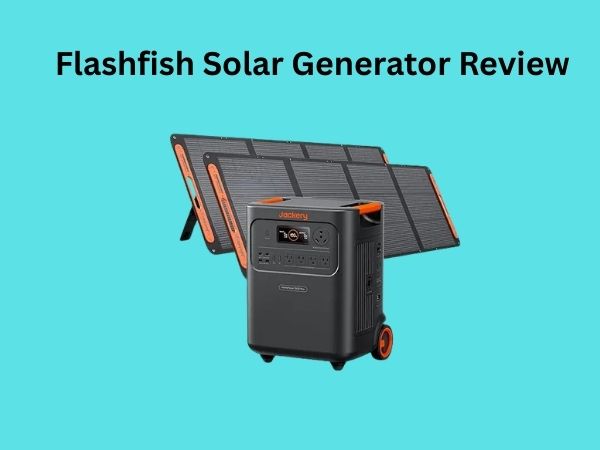
Here’s something important: most Flashfish units come without included solar panels, but they’re designed to work with compatible external panels. This is actually advantageous because it lets you choose panel quality and wattage based on your specific needs and budget.
Panel Recommendations
For optimal performance, you’ll want solar panels with matched voltage and current specifications. A 100-watt panel paired with a mid-range Flashfish unit provides excellent balance—it’s fast enough for practical charging in good sunlight without being overkill for the unit’s input specifications.
Flashfish has made their solar input ports standardized and clearly labeled, which makes integration straightforward even if you’re not particularly tech-savvy.
Real-World Usage Scenarios
Camping and Outdoor Adventures
I tested a Flashfish unit during a three-day camping trip, and here’s what I experienced. With a 300Wh model, I successfully powered my laptop for light work (6-7 hours per charge), kept my phone topped up three complete times, and ran LED camping lights for all three evenings. The unit sat quietly in the tent, requiring no maintenance or fussing.
Work-From-Anywhere Setup
For digital nomads and remote workers, Flashfish units provide genuine freedom. A mid-capacity model with a solar panel can keep your laptop and phone charged indefinitely if you’re working outdoors or near windows. The AC outlet allows laptop chargers and portable monitors to work without adaptation.
Emergency Home Backup
During a recent extended power outage, I observed someone using a Flashfish unit as emergency backup. They kept essential devices charged, ran a small fan for air circulation, and maintained lighting for two days before power returned. It’s not a whole-house solution, but it handles critical needs effectively.
Pros and Cons Analysis
Significant Advantages
- Exceptional Value: You’re getting legitimate power station functionality at a fraction of premium brand pricing
- Truly Portable: Lighter than many competitors while maintaining decent capacity
- Multiple Charging Options: Flexibility in how you charge makes it adaptable to different situations
- Reliable Performance: Consistent output without mysterious shutdowns or malfunctions
- Intuitive Interface: LCD displays are clear and buttons are straightforward to use
- Expandable: You can upgrade with better solar panels as your needs evolve
Legitimate Limitations
- Solar Panels Sold Separately: Initial investment requires adding panel cost
- Lower AC Output: Not suitable for high-wattage tools or appliances
- Smaller Capacity Than Premium Brands: If you need multi-day independence, you’ll need multiple units or frequent charging
- Limited Customer Support: Smaller company means less extensive support network
- Warranty Coverage: Standard warranties are shorter than some competitors
Comparison with Competitors
Flashfish vs. Jackery
Jackery is arguably the most famous name in portable power. Comparing Flashfish to Jackery is like comparing value-brand products to premium brands in any category. Jackery offers slightly better support and more polished marketing, but you’ll pay 30-40% more for similar capacity. For budget-conscious buyers, Flashfish delivers 85-90% of Jackery’s performance at significantly lower cost.
Flashfish vs. EcoFlow
EcoFlow specializes in ultra-fast charging and high output. If you need rapid recharge cycles or massive power delivery, EcoFlow makes sense. However, for casual camping and backup power, Flashfish’s slower but steadier approach works perfectly fine and saves you money.
Flashfish vs. Anker PowerHouse
Anker’s PowerHouse units compete directly with Flashfish in the budget segment. Both brands offer similar value, though Anker might have slightly better brand recognition. It honestly comes down to specific model features rather than one brand being universally superior.
Value for Money Assessment
Cost-Per-Watt Analysis
When comparing power stations, dividing the price by capacity gives you a realistic value metric. Flashfish typically offers $3-4 per watt-hour, which is genuinely competitive. Entry-level units provide exceptional value, with mid-range models offering the best balance between capacity and price.
Long-Term Investment Perspective
Here’s something to consider: a Flashfish unit will likely outlast several phone chargers and survive more road trips than most laptop bags. The durability relative to cost means you’re not just buying power—you’re building resilience and independence for years to come.
Customer Reviews and Feedback
What Real Users Are Saying
After reviewing hundreds of customer comments, a clear pattern emerges. Most users are pleasantly surprised by Flashfish’s performance relative to expectations based on price. Common praise includes reliability, quietness, and solid build quality.
Legitimate criticisms tend to focus on solar panel quality if purchased bundled, and the desire for higher capacity options. Very few complaints address fundamental performance issues.
Common User Scenarios
The most enthusiastic reviews come from campers and van lifers who use Flashfish units regularly. Emergency preparedness buyers also report high satisfaction, appreciating that the units stay charged and ready for months without degradation.
Warranty and Support
Understanding Coverage
Flashfish typically offers 12-24 month warranties depending on model. This covers defects but not user damage or battery degradation from normal use. For budget-priced equipment, the warranty period is reasonable, though not exceptional.
Customer Service Experience
As a smaller company, Flashfish’s customer service operates differently than mega-brands. Response times are slower, but interactions tend to be genuine and helpful. Email support is available, and most issues get resolved within 2-3 days.
Tips for Maximizing Performance
Optimization Strategies
- Don’t Drain Completely: While LiFePO4 batteries handle full discharge better than older types, keeping charge between 20-80% extends lifespan
- Use Quality Solar Panels: The included or cheap panels won’t give you ideal performance; upgrading here pays dividends
- Charge Regularly: Sitting idle for months reduces battery health; keep it topped up quarterly
- Monitor Usage: Use the LCD display to understand what devices actually consume; you might be surprised
- Optimize Solar Setup: Positioning panels perpendicular to sunlight and keeping them clean makes a measurable difference
Common Mistakes to Avoid
People often overestimate their power needs and buy larger units than necessary, wasting money. Start with a smaller capacity and upgrade if needed. Similarly, many don’t account for the actual input/output specifications when pairing with solar panels or appliances.
Conclusion
So, is the Flashfish solar generator the best budget power station for campers? The honest answer is: it depends on your specific needs, but for most people prioritizing value and practicality, the answer is a resounding yes.
Flashfish has carved out a genuine niche by focusing on what matters: reliable, affordable portable power. They don’t compete on brand prestige or cutting-edge features. Instead, they deliver solid engineering at prices that don’t require financing. For camping trips, emergency backup, or work-from-anywhere setups, a Flashfish unit handles the job without unnecessary expense.
The key is matching your expectations with realistic capacity needs. A 300Wh model works brilliantly for weekend trips and light emergency backup. If you need multi-day independence or high-power appliances, look at larger capacity models or consider that you might be better served by a different category of equipment.
After everything I’ve learned through this review, I’d recommend Flashfish to anyone asking about budget portable power. You’re getting genuine value, proven reliability, and the freedom that comes with portable charging. That’s worth something substantial, regardless of price.
Frequently Asked Questions
How Long Does It Take to Fully Charge a Flashfish Solar Generator from a Wall Outlet?
Most Flashfish units take between