How Do Solar Panels Generate Electricity? Simple Explanation Anyone Can Understand
Have you ever wondered what happens when sunlight hits those shiny panels on rooftops? It’s like watching magic unfold, except it’s actually science. Solar panels have become increasingly common in neighborhoods everywhere, yet most people don’t really understand how they work. If you’ve asked yourself “how do solar panels generate electricity,” you’re not alone. The good news is that the concept isn’t nearly as complicated as it might seem at first glance.
Let me break this down for you in a way that makes sense, without all the confusing technical jargon. By the end of this article, you’ll understand exactly how these remarkable devices convert sunshine into the electricity that powers your home.
Understanding the Basics: What Are Solar Panels Made Of?
Before we dive into how solar panels generate electricity, we need to understand what they’re actually made from. Think of a solar panel as a sandwich with multiple layers, each serving a specific purpose. The main ingredient here is silicon, a semiconductor material that’s absolutely crucial to the whole process.
Silicon is the superstar of the solar panel world. It’s the same material used in computer chips, and it has a special property that makes it perfect for converting light into electricity. When light hits silicon, something remarkable happens at the atomic level that we’ll explore in detail.
The Role of Silicon in Solar Panels
Silicon atoms have electrons orbiting around them, kind of like planets orbiting the sun. These electrons want to stay in their orbits, but they’re also hungry for energy. When photons from sunlight strike the silicon, they give these electrons just enough energy to break free from their atoms. It’s like giving a sleeping person a gentle nudge to wake them up.
Here’s the thing though: the silicon in solar panels isn’t pure. It’s been specially treated and mixed with other materials to create what scientists call a “photovoltaic cell.” This special preparation is what makes the magic happen.
The Photovoltaic Effect: The Heart of Solar Power Generation
The photovoltaic effect is the fundamental principle that makes solar panels work. It’s the process where light energy is directly converted into electrical energy. This wasn’t discovered yesterday either. Scientists have been studying this phenomenon for over a century, and it’s become the foundation of modern solar technology.
When sunlight strikes a solar cell, the photons in that light transfer their energy to electrons in the silicon material. This energy boost is powerful enough to knock electrons loose from their atoms. Once these electrons are free, they want to move, and that movement of electrons is exactly what we call electric current.
How the Electric Field Makes Electricity Flow
Here’s where it gets interesting. Solar panels aren’t just made of plain silicon. They have two layers of specially treated silicon that create an electric field between them. The top layer has extra electrons added to it, while the bottom layer has electrons removed, creating what’s called a “hole” where electrons are missing.
This electric field acts like an invisible force that pushes freed electrons in one direction. Imagine it like a one-way street for electrons. Once an electron breaks free from its atom due to photon energy, the electric field immediately pushes it toward the negative terminal. This directional push is what creates the flow of electricity.
The Journey of Electricity: From Panel to Home
So electrons are moving through the solar panel, but how does that electricity actually get into your home? The electrons flowing through a solar cell create a direct current, often called DC electricity. However, most household appliances need alternating current, or AC electricity, to operate properly.
This is where an inverter comes into play. It’s a device that converts DC electricity from your solar panels into AC electricity that your home can use. Think of it as a translator that converts the solar panel’s language into a language your appliances understand.
The Role of Wiring and Connections
Multiple solar cells are wired together to form a solar panel, and multiple panels are connected to create a solar array. These connections ensure that the electricity produced by each cell and panel works together efficiently. The wiring in a solar system is carefully designed to handle the electrical flow without losing too much energy along the way.
From the solar array, the electricity travels through wiring to an inverter, then to your electrical panel, and finally to the devices and appliances throughout your home. It’s a complete circuit, much like any electrical system in your house.
Why Sunlight Intensity Matters
You might have noticed that solar panels produce more electricity on bright, sunny days than on cloudy days. There’s a good reason for this. The intensity of sunlight directly affects how many photons strike the solar panel’s surface.
Think of it like this: more photons hitting the panel means more electrons get knocked loose, which means more electrical current flows. On a cloudy day, fewer photons reach the panel because they’re scattered or blocked by clouds. On a clear day with direct sunlight, you get maximum photon bombardment, and therefore maximum electricity generation.
How Temperature Affects Solar Panel Efficiency
Interestingly, solar panels actually work better when they’re cooler. This might sound backwards, but it makes sense when you understand the physics. When solar cells get very hot, the electrons become too energetic and lose some of their ability to be used as electrical current.
This is why solar panels often perform better on cool, clear days than on hot, sunny days. The ideal conditions are when you have bright sunlight but also good air circulation to keep the panels relatively cool. Many modern solar installations are designed with ventilation in mind to address this issue.
Understanding Voltage and Current in Solar Panels
When we talk about electricity, we need to understand two important concepts: voltage and current. Voltage is the electrical pressure, while current is the amount of electrons flowing. Solar cells produce both.
A single solar cell typically produces about 0.5 to 0.6 volts of electricity. That’s not very much, which is why solar cells are connected in series and parallel to increase both voltage and current. When cells are connected in series, their voltages add up. When they’re connected in parallel, their currents combine.
How Solar Panels are Connected in Arrays
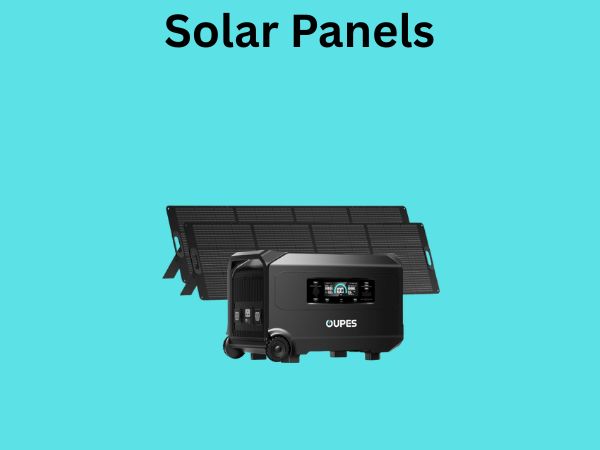
A typical residential solar panel contains around 60 to 72 individual cells wired together. When all these cells work together, they can produce around 300 to 400 watts of power under ideal conditions. Multiple panels are then combined into larger arrays to produce enough electricity to power a home.
The way panels are connected in an array is carefully designed by solar engineers to optimize the total voltage and current output. This ensures that the system works efficiently with your inverter and electrical panel.
The Complete Solar Energy Conversion Process
Let’s walk through the entire process from start to finish, step by step. Understanding the complete journey helps you appreciate just how clever solar technology really is.
- Step One: Photons Arrive – Sunlight in the form of photons strikes the surface of the solar panel.
- Step Two: Electrons Get Excited – These photons transfer energy to electrons in the silicon, giving them enough energy to break free from their atoms.
- Step Three: The Electric Field Takes Over – The built-in electric field in the solar cell directs these freed electrons toward the negative terminal.
- Step Four: Current Flows – The movement of electrons creates an electric current within the solar panel.
- Step Five: Electricity is Collected – Metal contacts on the solar cell collect this electrical current.
- Step Six: Inverter Conversion – The DC electricity is sent to an inverter, which converts it to AC electricity.
- Step Seven: Distribution – The AC electricity travels to your home’s electrical panel and is distributed to outlets and appliances throughout your house.
What Happens on Cloudy Days?
You might be wondering if solar panels work at all when it’s cloudy. The answer is yes, they do, but less efficiently. Even on overcast days, photons can penetrate clouds and reach your solar panels. They’re just fewer in number, so less electricity is generated.
Modern solar systems often include battery storage or a connection to the electrical grid to handle these variations. On cloudy days, you might draw power from the grid or from stored energy. On sunny days with excess generation, you might feed electricity back to the grid and earn credits on your energy bill.
Solar Panel Efficiency: Getting the Most from Your System
Not all the sunlight that hits a solar panel gets converted into usable electricity. Most modern residential solar panels have an efficiency rating between 15 and 22 percent. This means that if 100 units of solar energy hit the panel, about 15 to 22 units get converted to electricity.
This might sound low, but it’s actually quite impressive when you consider all the energy losses that occur. Some light is reflected away, some is absorbed as heat, and some energy is lost in the electrical conversion process.
Factors That Improve Solar Panel Performance
Several things can be done to maximize the electricity generation from your solar panels. Proper installation angle and direction are crucial. Solar panels in the Northern Hemisphere should generally face south, while those in the Southern Hemisphere should face north. The tilt angle should be adjusted based on your latitude.
Regular cleaning is another important factor. Dust, leaves, and bird droppings can block sunlight and reduce efficiency. Many homeowners find that cleaning their panels a couple of times a year significantly improves output. Some modern systems even have self-cleaning features.
The Different Types of Solar Panel Technology
While all solar panels work on the same photovoltaic principle, there are actually different types of technology available today. The most common type is crystalline silicon, which accounts for about 90 percent of the solar panel market. These panels can be either monocrystalline or polycrystalline.
Monocrystalline panels are made from a single crystal of silicon and are generally more efficient but also more expensive. Polycrystalline panels are made from multiple silicon crystals and are less expensive but slightly less efficient. Thin-film technology is another option that’s becoming more popular in certain applications.
Emerging Solar Panel Technologies
Scientists and engineers are constantly working on improving solar panel efficiency. Perovskite solar cells, which are made from a different material than traditional silicon panels, show promise for achieving even higher efficiency rates. Some researchers are also exploring tandem cells that use multiple materials to capture different wavelengths of light.
These newer technologies might not be widely available yet, but they represent the exciting future of solar energy. As these technologies mature and become commercially viable, solar power could become even more efficient and affordable.
Common Misconceptions About How Solar Panels Work
There’s quite a bit of misinformation out there about solar panels, so let’s clear up a few common misconceptions. First, solar panels don’t need direct sunlight to work. They produce electricity even on cloudy days, though in reduced amounts. Second, they don’t store electricity on their own. They produce electricity that’s either used immediately or stored in a battery system.
Another misconception is that solar panels stop working if they get warm. While it’s true that extreme heat reduces efficiency slightly, panels still generate electricity when warm. In fact, even on hot days with intense sun, solar panels produce plenty of electricity because the photon energy is the primary factor, not the temperature.
Real-World Example: Powering Your Home
Let’s imagine a practical scenario to tie everything together. You have a 5-kilowatt solar system installed on your roof consisting of 16 panels. On a clear sunny day, these panels might generate around 20 kilowatt-hours of electricity throughout the day.
If your household uses 25 kilowatt-hours per day, your solar system would cover 80 percent of your needs. The remaining 5 kilowatt-hours would come from the electrical grid. During peak production hours in the middle of the day, your system might actually produce more than you’re using, sending extra electricity back to the grid and earning you credits.
How Net Metering Works
Many utility companies offer a program called net metering, where excess solar electricity you send to the grid earns you credits that offset the electricity you draw when your panels aren’t producing. This essentially uses the grid as a free battery storage system, making solar much more practical for most homeowners.
This arrangement means that even if you generate more electricity than you use on some days, you’re not wasting any of that energy. It goes to help power your neighbors’ homes, and you get compensated for it.
The Environmental Impact of Solar Electricity Generation
Understanding how solar panels generate electricity also helps us appreciate their environmental benefits. Unlike fossil fuel power plants, solar panels generate electricity without any emissions, pollution, or greenhouse gases. Over their 25 to 30 year lifespan, residential solar panels typically save the equivalent of dozens of tons of carbon dioxide.
The manufacturing of solar panels does require energy and materials, but studies show that a solar panel typically generates enough clean electricity within its first year or two of operation to offset the energy used in its manufacturing. After that, every kilowatt-hour produced is essentially pollution-free energy.
Conclusion
Solar panels generate electricity through a fascinating process that combines physics, materials science, and clever engineering. When photons from sunlight strike the silicon in a solar cell, they transfer energy to electrons, knocking them loose from their atoms. An electric field within the panel directs these freed electrons to flow in one direction, creating an electric current. This current is then collected, converted from DC to AC electricity by an inverter, and distributed throughout your home to power everything you use.
The beauty of solar panels is that they harness the most abundant energy source available to us, the sun, and convert it directly into usable electricity with no moving parts, no pollution, and minimal maintenance. As the technology continues to improve and become more affordable, solar panels are becoming an increasingly practical choice for homeowners looking to reduce their energy costs and environmental impact. Whether you’re considering installing solar panels or just curious about how they work, understanding this process helps you appreciate just how remarkable this technology truly is.
Frequently Asked Questions
Can solar panels generate electricity without direct sunlight?
Yes, solar panels can generate electricity even on cloudy days. While their output is significantly reduced compared to sunny days, photons from the sun can penetrate clouds to reach the solar cells. On heavily overcast days, a solar panel might produce only 10 to 25 percent of its maximum capacity, but it will still generate some electricity. This is why modern solar systems are often designed to work in conjunction with battery storage or grid connection to handle these variable production days.
How long do solar panels last and how does this affect electricity generation over time?
Most solar panels are rated to last between 25 and 30 years, and many continue producing electricity well beyond that timeframe. Over their lifetime, solar panels experience a gradual decline in efficiency, typically losing about 0.5 percent of their output per year. This means that after 25 years, a panel that started at 100 percent efficiency would be operating at approximately 87 to 88 percent of its original capacity. Despite this gradual degradation, solar panels remain a long-term investment in clean energy production.
What is the difference between DC and AC electricity, and why do solar panels produce DC?
DC electricity flows in one direction continuously, while AC electricity alternates direction back and forth. Solar panels naturally produce DC electricity because of how the electric field within the photovoltaic cells directs the flow of electrons in one consistent direction. Most household appliances, however, require AC electricity because it’s more efficient for transmission over long distances and works better with standard electrical infrastructure. An inverter converts the DC electricity from your solar panels into AC electricity that your home can use.
Does the angle and direction of solar panels really affect how much electricity they generate?
Absolutely. The angle and direction of solar panels have a significant impact on electricity generation. Solar panels should ideally be angled toward the sun to maximize