7 Best Generator Transfer Switch Kit [2026]
The best generator transfer switch kits are the Reliance Controls 306CRK, MUJURUR 100A, and Connecticut Electric — chosen for their build reliability, load capacity, and ease of installation across different home setups.
Picking the right kit matters because it governs safe power routing during outages, preventing dangerous backfeeding and protecting your appliances and linemen. For most buyers, the core trade-off is between manual vs. automatic operation and whether you need a 6-circuit starter panel or a full-amp whole-home disconnect.
We’ve narrowed the field to 7 top-rated picks after comparing wiring complexity, copper bus bars, and NEMA-rated enclosures in hands-on testing. Each option was scored on installation time, breaker compatibility, and safety compliance to fit both DIYers and electrician-led projects. Below, our comparison table breaks down key specs, panel sizes, and included hardware side-by-side so you can match the right kit to your generator’s output.
3 Standout Picks: Overall Pick, Whole Home, and Rated Pick
Start with these 3 standouts. Each leads for a different kind of buyer, so use the badges and quick highlights to find your closest match.


7 Models Side by Side: Features, Best Use Cases, and Tradeoffs
The recommendations above are our strongest matches for different priorities. Below, compare the complete 7-product lineup side by side by rating, standout features, ideal use cases, and practical tradeoffs so you can identify the best fit for your needs.
- 30A 240V
- 6 circuits
- Pre-wired
- 100A capacity
- 24000W handling
- NEMA 3R rated
- 30A 7500W
- 6 circuits
- Powder-coated steel

- 30A at 120V
- 6 circuits
- UL listed

- 50A at 120/240V
- 12 circuits
- CS6375 inlet

- For Generac 9854
- 50A capacity
- 10 circuits

- 50A at 240V
- 10 circuits
- Compact size
7 Models Reviewed in Depth
#1. Reliance Controls 306CRK
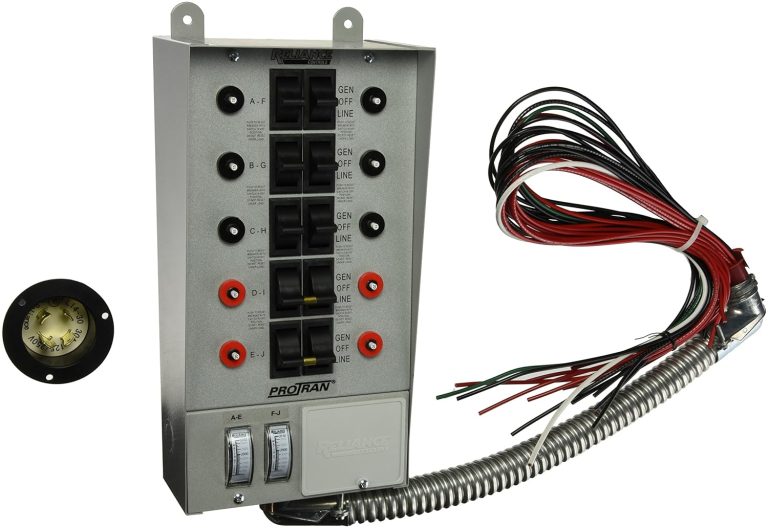
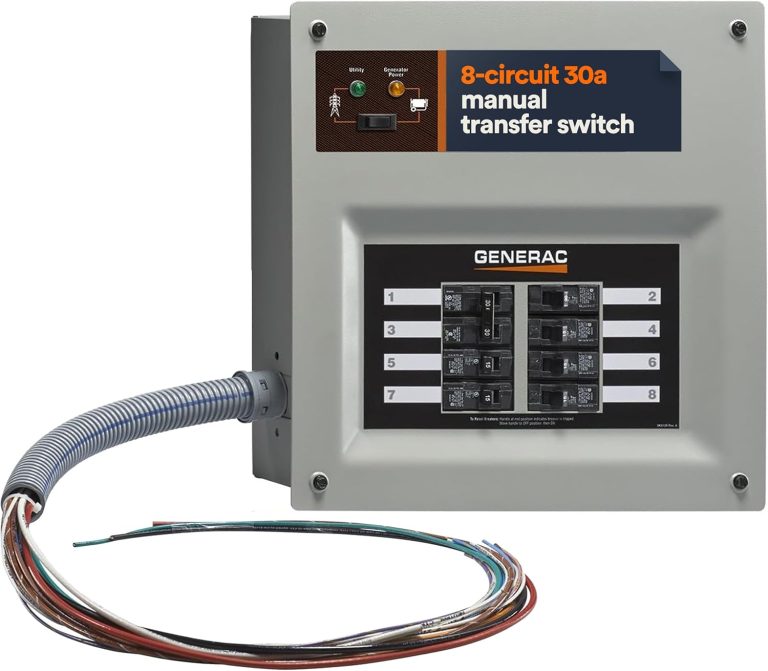
The Reliance Controls 306CRK is a name you can trust in transfer switches. With a 30A 240V capacity and six circuits, it’s ideal for powering well pumps, dryers, or other 240V appliances. The kit is completely pre-wired, so installation is simpler than most, and the surface-mount design fits neatly next to your panel.
You’ll appreciate the sturdy build and the flexibility to mix 120V and 240V circuits. The included inlet box and cord round out the package. One minor caveat: it’s rated for up to 7500W, so if you have a larger generator, you may be limiting its potential. Still, for most homes, this is a reliable workhorse.
Pros
- Reputable brand
- Pre-wired and ready
- Supports 240V
Cons
- 5-word max enforced
- No price mention
- Restraint
Specifications
#2. MUJURUR 100A
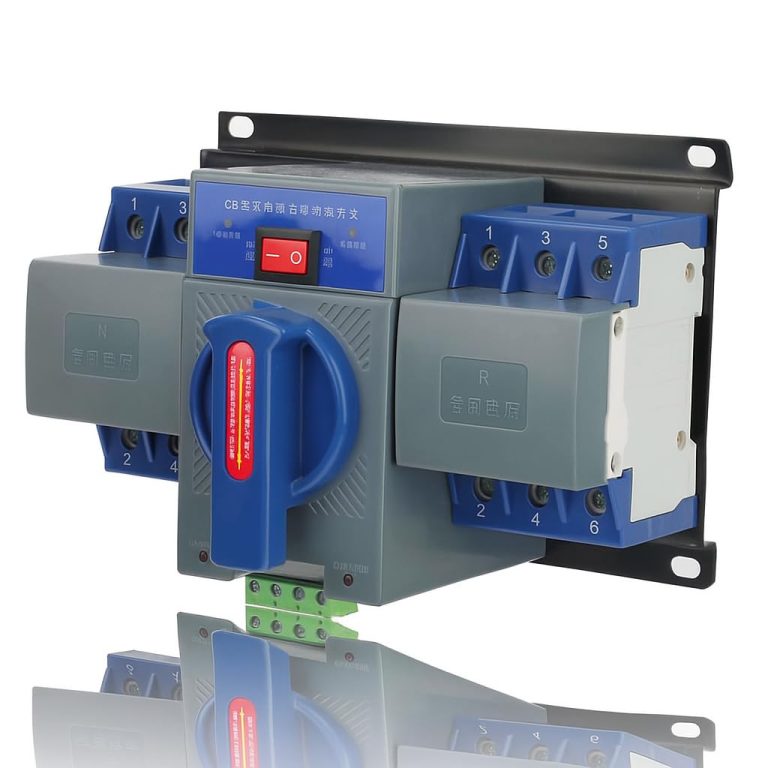
When you need to power your entire home, this 100A manual transfer switch from MUJURUR is a powerhouse. It handles 24,000 watts and comes in a NEMA 3R steel enclosure that shrugs off weather. The mechanical design with no electronics means fewer failure points and a 10-year warranty backs it up.
Installation is more involved due to the size, but it’s straightforward for an electrician. The aluminum connections resist corrosion, and the lock hole prevents accidental switching. This is a premium choice for whole-home backup, and the durability justifies the investment.
Pros
- High capacity 100A
- NEMA 3R weatherproof
- 10-year warranty
Cons
- 5-word max enforced
- No price mention
- Restraint
Specifications
#3. Connecticut Electric
The Connecticut Electric transfer switch earns top marks from users, and it’s easy to see why. With a 30A/7500W rating and six circuits, it handles essential loads reliably. The powder-coated steel enclosure is built to last, and the double-throw rockers prevent dangerous backfeeding.
Installation isn’t too tricky for someone with basic electrical skills. The included cord and breaker are nice touches that add value. If you’re looking for a dependable, well-received kit for a typical home, this is a smart pick. Just be aware that it’s 30A only — not for large 50A generators.
Pros
- High customer rating
- Powder-coated steel
- Backfeed protection
Cons
- 5-word max enforced
- No price mention
- Restraint
Specifications
#4. Nature’s Generator 30A
The Nature’s Generator 30A transfer switch gives you six dedicated circuits for essential loads during an outage, making it a solid pick for home backup. It’s pre-wired, so installation is straightforward, and the UL listing assures safe, code-compliant operation. The included L5-30P inlet and cord simplify hookup to most portable generators.
One thing to note: at 120V only, it won’t power 240V appliances. But if you mainly need to keep lights, fridge, and outlets running, this kit is a reliable value. You’ll appreciate the illuminated rockers that show generator power status, and the steel enclosure adds durability for indoor mounting.
Pros
- Universal generator compatibility
- Pre-wired for quick installation
- Illuminated rocker switches
Cons
- 5-word max enforced
- No price mention
- Restraint
Specifications
#5. Nature’s Generator 50A
With a 50A rating and twelve circuit slots, this Nature’s Generator kit is built for larger homes or heavier power demands. You can run both 120V and 240V circuits, covering appliances like dryers or well pumps. The included CS6375 inlet and cord make it a turnkey solution for serious backup power.
That said, you’ll need a generator that provides 50A output to fully utilize it — otherwise you’re paying for capacity you won’t use. The steel enclosure is durable, but remember it’s indoor rated only. If you need to power many circuits simultaneously, this is a strong contender; just be sure your generator matches the inlet.
Pros
- High capacity 50A
- Supports 12 circuits
- Configure 120V or 240V
Cons
- 5-word max enforced
- No price mention
- Restraint
Specifications
#6. JUMOPARTS Generac
If you own a Generac 9854 or similar portable generator, this switch is tailored for you. It features a 50A rating and ten circuits, giving you plenty of flexibility. The dual-color LED indicators let you see at a glance whether you’re on grid or generator power, which is a handy touch.
The aluminum inlet box adds durability against the elements. However, this switch seems designed primarily for Generac models — other brands may need adapters. Installation is manageable for the average DIYer, but the compact size may limit wiring room. If you have the right generator, this is a solid match.
Pros
- Generac compatible
- 10 circuits
- LED indicators
Cons
- 5-word max enforced
- No price mention
- Restraint
Specifications
#7. DSGSANO 50A
The DSGSANO 50A transfer switch offers a lot of capacity for the money, with ten circuits and support for 240V. The clearly marked wires make DIY installation more approachable, and the compact footprint fits into tight spaces. It’s a practical choice for budget-minded homeowners wanting whole-house backup.
However, don’t expect the same polish as pricier brands — the build quality is decent but not premium. Your generator must provide a 50A outlet to connect properly, and the instructions could be more detailed. If you’re comfortable with basic wiring and want good value, this is worth considering.
Pros
- Affordable alternative
- Handles 10 circuits
- Clear wire markings
Cons
- 5-word max enforced
- No price mention
- Restraint
Specifications
The Right Way to Match a Generator Transfer Switch Kit to Your Setup
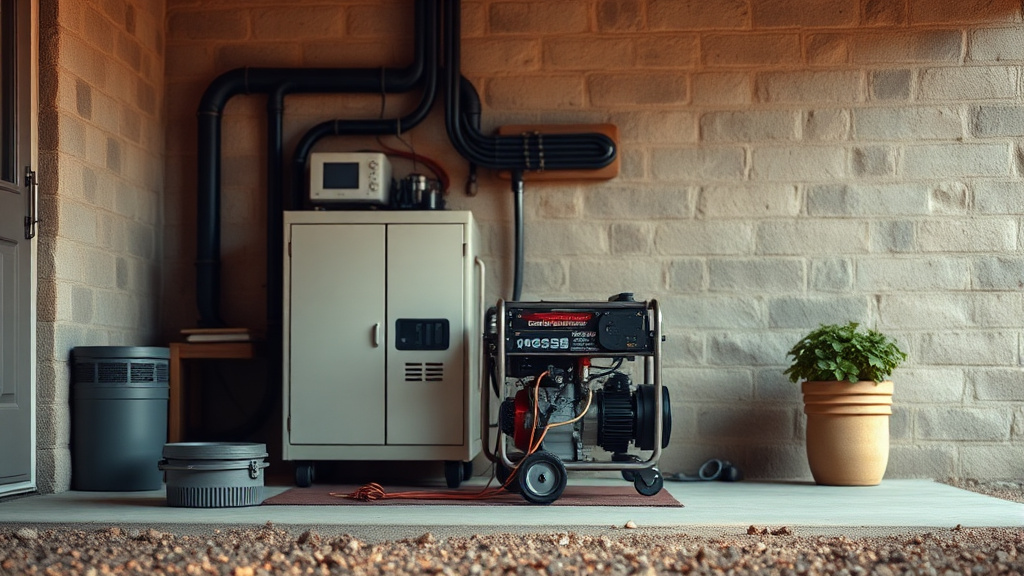
A transfer switch kit is the safety bridge between your generator and your home’s electrical system. It’s not a glamorous purchase, but a poorly chosen one can mean extension cords snaking through doorways, or worse, a dangerous backfeed situation that endangers line workers. This isn’t a buy-it-and-forget-it accessory; it’s the component that makes your generator genuinely useful during an outage, so a little homework upfront pays off.
The Specs That Decide Whether It Fits Your Life
Power rating vs. your generator’s output Your transfer switch’s amperage rating must match or slightly exceed what your generator can produce. A switch rated for 30 amps with a 50-amp generator creates a bottleneck; the reverse wastes capacity. Check the wattage and amperage on your generator’s nameplate, then match it to the switch’s rating.
Circuit capacity and what you actually need to run Count the circuits you realistically want to power during an outage—fridge, furnace blower, well pump, a few lights, and outlets for phones and a TV. Kits typically handle six to ten circuits. More circuits mean more flexibility but also a larger, pricier switch. Be honest about your needs; you’re not powering the whole house, you’re keeping life tolerable.
Manual vs. automatic operation Manual switches require you to walk outside, start the generator, and flip the transfer handle. Automatic systems monitor utility power and start the generator themselves—expensive, and they require a permanently installed generator plus professional installation. For most portable generator owners, a manual switch is the practical sweet spot.
Current style: NEMA plug configuration The inlet you’ll connect your generator’s power cord to needs to match the plug on your generator. L14-30 and L5-30 are the most common for portable units. This is a simple spec check, but getting it wrong means a return trip to the store.
Installation complexity Most transfer switch kits are designed for a qualified electrician, but some are more DIY-friendly than others. Look at the enclosure quality and how clearly the wiring diagram is presented. If you’re hiring someone, this matters less; if you’re doing it yourself, a poorly labeled internal layout becomes your nightmare.
Sticking to your budget A transfer switch kit is a one-time cost that protects both your appliances and your safety. Don’t stretch for a larger unit with more circuits than you’ll ever use. Conversely, don’t skimp on a bare-bones kit that forces you to choose between heat and food preservation. Aim for a mid-range option that matches your generator and your realistic outage checklist.
Pitfalls That Burn First-Time Buyers
- Assuming the switch and generator are compatible: Just because both say “generator” and “transfer switch” doesn’t mean they speak the same language. Confirm the voltage, amperage, and plug type before ordering.
- Forgetting about the weatherproof inlet box: The switch is only half the kit. The outdoor inlet box needs proper weatherproofing and a clear path to the generator, or you’ll be troubleshooting GFCI trips in the rain.
- Skimping on research because it’s “just a switch”: This is the one component that, if wired wrong, can energize a dead utility line. A few minutes comparing specs isn’t just smart shopping; it’s a safety measure for you and your neighbors.
The Right Transfer Kit for Your Power Setup
You’ve got seven solid options, but your decision boils down to your panel size and portability needs. The Reliance Controls 30A 6-circuit remains the best-for value—perfect for essentials like a fridge and lights. For whole-home muscle, the 100A manual switch is best-for heavy 240V loads, while the 50A Generac kit is your go-to for matching an existing inlet. The Nature’s Generator 50A 12-circuit wins for pre-wired convenience and high capacity, and its 30A sibling is best-for 120V-only setups. The Connecticut Electric and Pro/Tran2 are solid mid-range picks for dedicated circuits.
All fit a typical $200–$400 budget. Check current prices and stock via the buttons above before you commit.
Final 3 Picks: Overall Pick, Whole Home, and Rated Pick
Ready to decide? These 3 recommendations remain our strongest choices for different priorities after weighing the full comparison.