Generator Transfer Switch Types Explained for Homeowners
The three main types of generator transfer switches are manual transfer switches, automatic transfer switches, and interlock kits. A transfer switch connects your generator to your home’s electrical panel so you can power your circuits safely without backfeeding the grid.
Choosing the right switch depends on your budget, your comfort with flipping a switch during an outage, and whether you want power to come back on without you lifting a finger. We found that each type serves a different need, and the “best” one really comes down to how you plan to use your generator during an emergency.
- Manual transfer switches are the most affordable and reliable option. You flip the switch yourself when the power goes out.
- Automatic transfer switches detect the outage and start your generator on their own. You barely have to do anything.
- Interlock kits are a budget-friendly workaround that lets you use your existing breaker panel with a generator.
- Safety matters most. All three types prevent dangerous backfeeding that can harm utility workers.
- Your generator size and whether you have a portable or standby unit will dictate which switch works for you.
Below, we break down each type of generator transfer switch, compare the costs, and walk you through how to pick the right one for your home and your power needs.
Breaking Down the Different Generator Transfer Switch Types
You have three solid options when it comes to connecting a generator to your home. We found that each one handles the safety and the convenience factor a little differently. Let’s walk through how they work so you can see which one fits your lifestyle.
Manual Transfer Switches: The Reliable Workhorse
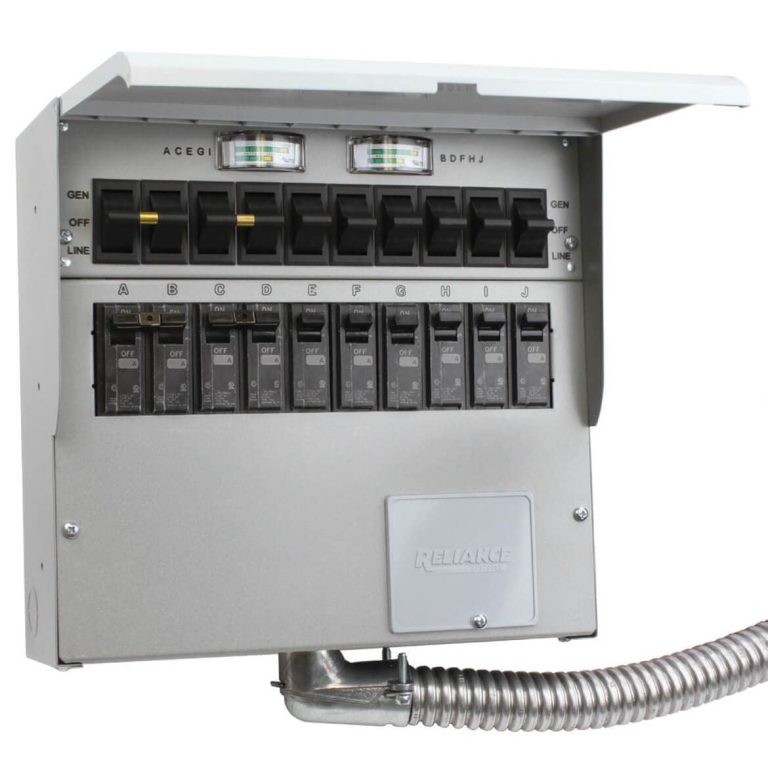
A manual transfer switch is the middle ground between cost and convenience. You get a dedicated box mounted next to your electrical panel. When the power goes out, you head outside or to the garage, plug in your generator, and flip a few breakers.
This type of switch forces you to pick which circuits you want to power. You decide between the fridge, the well pump, or the lights. You are in total control at all times.
How a Manual Switch Works
The switch acts as a bridge between your generator and your home wiring. It physically separates your house from the utility grid. That separation is the key safety feature.
You move a lever to choose between “Utility” and “Generator” power. Then you switch on the specific circuits you need. It is simple, mechanical, and very hard to break.
Why Homeowners Pick a Manual Switch
- Lower upfront cost compared to automatic models.
- Simple operation that you control with your own hands.
- Works with portable generators of almost any size.
- Fewer moving parts means less that can fail over time.
Many homeowners choose this option because they only lose power a few times a year. If you are home during the outage, walking over to flip a switch is not a big deal.
Automatic Transfer Switches: Set It and Forget It
An automatic transfer switch (ATS) does the thinking for you. It monitors the utility power constantly. The second it senses an outage, it signals your generator to start up.
Within seconds, your home switches over to generator power without you touching anything. When the grid comes back, the ATS waits a moment, then switches you back to utility power and shuts the generator down.
The Convenience Factor of an ATS
This is the closest thing to having no outage at all. You might be at work or on vacation when the power dies. Your home stays warm, the food stays cold, and the sump pump keeps running.
We found that this type of switch is almost always paired with a permanently installed standby generator. It is a whole-home system built for seamless power.
Cost and Installation Considerations
This is the premium option, and you pay for that convenience. The equipment costs more, and the installation is more complex. You will need a licensed electrician to wire it into your panel and connect it to the generator.
Many experts say that if you rely on medical equipment or work from home, the extra cost is worth the peace of mind. You are buying the ability to do absolutely nothing during an emergency.
Interlock Kits: The Budget-Friendly Workaround
An interlock kit is a clever metal plate that slides over your main breaker panel. It is not a separate box. Instead, it physically prevents you from turning on the main breaker and the generator breaker at the same time.
You install a specific generator breaker in your panel. When the power goes out, you turn off the main breaker. Then you slide the interlock plate into place and flip the generator breaker on.
Why the Interlock Is So Popular
Cost is the big reason. An interlock kit is significantly cheaper than a manual transfer switch. If you already have a portable generator and a standard electrical panel, this is the most affordable way to power your home legally.
It also gives you access to every circuit in your house. You are not locked into just a few selected circuits. You can power anything, as long as you do not overload the generator.
The Safety Catch You Need to Know
The interlock relies on you to do things in the right order. You must remember to turn off the main breaker first. If you skip that step, you risk backfeeding power to the grid.
Backfeeding is dangerous. It can electrocute a utility worker repairing a line. Research and safety guidelines from the Electrical Safety Foundation International stress that backfeeding is a leading cause of generator-related deaths. The interlock makes it harder to make that mistake, but it does not make it impossible.
Comparing the Three Main Options
You want to see the differences side by side. We put together a quick comparison table to help you weigh the pros and cons based on your situation.
| Feature | Manual Switch | Automatic Switch | Interlock Kit |
|---|---|---|---|
| Cost Range | Moderate | Highest | Lowest |
| Convenience | You flip it yourself | Fully hands-free | You flip breakers |
| Generator Type | Portable or standby | Standby only | Portable only |
| Circuit Selection | Pick specific circuits | Whole home or selected | Any circuit you want |
| Installation | Electrician recommended | Electrician required | DIY possible |
| Safety Level | Very safe | Very safe | Safe if used correctly |
You can see the trade-offs clearly. More convenience costs more money. More control costs more effort. The right choice balances your budget and your tolerance for getting up off the couch.
How to Match the Switch to Your Generator
Your generator plays a big role in this decision. You cannot install an automatic switch if you own a portable generator. The ATS requires a generator that starts itself, which means a permanently installed standby unit.
Portable Generator Owners
You have two options: a manual transfer switch or an interlock kit. We found that a manual switch is the cleaner, more organized setup. It gives you a dedicated spot to plug in your generator cord and clearly labeled circuits.
The interlock kit is simpler and cheaper, but it leaves your generator cord running across the floor to a breaker in your main panel. Both work. It just comes down to how polished you want the setup to look.
Standby Generator Owners
If you bought a standby generator, you are almost certainly going with an automatic transfer switch. That is the standard pairing. The generator sits outside, wired directly into the switch, and the switch handles everything.
Many experts say this is the most comfortable setup for long outages. You do not have to trudge outside in a storm to connect anything. It just works.
Key Safety Checks Before You Buy
No matter which type you pick, safety is the top priority. We found that most generator accidents happen because of improper connection. Here is a quick safety checklist to run through before you commit to a purchase. If you choose an automatic switch, our guide to the automatic transfer switch installation diagram walks you through the wiring.
- Verify local codes for generator connection requirements in your area.
- Match the switch rating to your generator wattage to avoid overloads.
- Hire an electrician for anything you are not 100% confident about.
- Test your setup before an actual outage hits.
- Never plug a generator directly into a wall outlet.
- Keep the generator dry and place it away from windows and doors.
Taking these steps protects you, your family, and the workers who restore your power. It is worth the extra effort to do it right.
Making the Final Call on Your Transfer Switch
You know your habits and your budget better than anyone. If you want to save money and do not mind a little manual work, the interlock kit gets the job done. If you want a clean, dedicated setup with clear labels, the manual switch is a great upgrade.
If money is not the main concern and you want power without lifting a finger, the automatic transfer switch is the clear winner. We found that most people who buy one never regret it.
Think about your last power outage. Were you home? Did you have to dig out flashlights? Picture yourself during the next storm. Which setup would make you feel most at ease? That answer usually points you toward the right switch.
Conclusion
You now know the three main ways to connect a generator to your home. Manual switches give you control at a fair price. Automatic switches deliver hands-free power, but they cost more. Interlock kits save you the most money and give you access to every circuit, if you follow the safety steps.
The right choice comes down to your generator type, your budget, and how much effort you want to put in during a storm. You can’t go wrong with any of these options as long as you avoid backfeeding. So check your generator’s wattage, look at your panel, and pick the setup that fits your life. Then get it installed before you actually need it. Your future self will thank you when the lights go out.
Frequently Asked Questions
Can I install a transfer switch myself?
You can install an interlock kit yourself if you are comfortable working in your electrical panel. Manual and automatic transfer switches are more complex and usually need a licensed electrician. We recommend hiring a pro for anything that involves rewiring your main panel. For guidance on where to place your switch, our article on installing a transfer switch indoors covers the key rules.
What size transfer switch do I need for my generator?
Your transfer switch should match your generator’s wattage and your home’s electrical capacity. A 5,000-watt portable generator pairs well with a 50-amp manual switch. Standby generators typically use a 100-amp or 200-amp automatic switch. Check your generator’s output and your panel’s rating before you buy.
Does a transfer switch increase home value?
Yes, a professionally installed transfer switch can make your home more attractive to buyers. It shows that your electrical system is set up for emergencies. Whole-home backup systems with an automatic switch are especially appealing in areas that get frequent storms or power outages.
Will a transfer switch work with any portable generator?
Most portable generators work with manual transfer switches and interlock kits as long as they have the right outlet. You will need a generator with a 120/240-volt output for most home setups. Smaller inverters can work, but you will have to choose your circuits carefully to avoid overloading the generator.
What is the difference between a transfer switch and a sub-panel?
A transfer switch is a safety device that separates your home from the utility grid during an outage. A sub-panel is just an extra breaker box that organizes circuits. Some manual transfer switches are built into a sub-panel, which makes it easy to control which circuits get generator power. The two work together, but they are not the same thing.