Survival Mode: How Long Will a Patriot Solar Generator Run a Refrigerator?
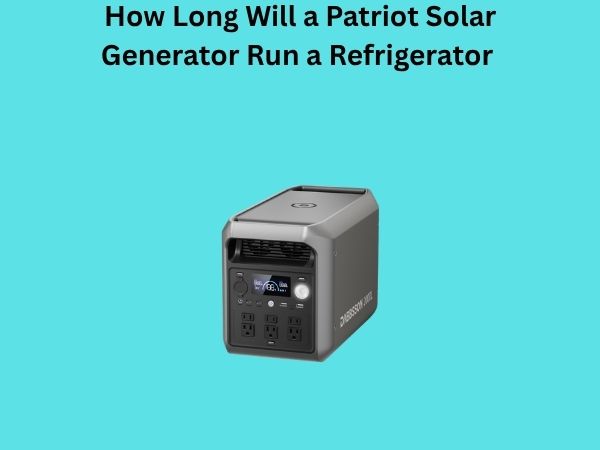
Picture this: you’re facing a power outage, and your refrigerator is humming along like nothing happened. How is that possible? Well, if you’ve got a Patriot solar generator backing you up, you might just be living the dream. But here’s the real question that keeps most people up at night: exactly how long can this system keep your food from spoiling? Let me walk you through everything you need to know about running a refrigerator on solar power.
Understanding the Basics: What Makes a Patriot Solar Generator Tick
Before we dive into the nitty-gritty of runtime calculations, it’s important to understand what you’re actually working with. A Patriot solar generator isn’t just one magic box—it’s a complete system that combines several key components working in harmony.
The Core Components of Your System
Think of a Patriot solar generator like a team where everyone has a specific job. You’ve got your solar panels collecting energy from the sun, acting as the primary power source. Then you have the battery storage unit, which is essentially the heart of the system—this is where all that solar energy gets stored for later use. Finally, there’s the inverter, which converts that stored energy into the type of electricity your refrigerator actually needs.
Without understanding how these pieces work together, you’ll never truly grasp how long your fridge will actually run. It’s like asking how far you can drive without knowing your car’s fuel tank capacity or fuel efficiency.
The Power Consumption Reality: How Much Energy Does Your Refrigerator Actually Need?
Here’s where things get interesting, and honestly, this is where most people go wrong. Your refrigerator isn’t a constant power hog. It’s more like a pulsing heart—it runs in cycles, starting and stopping throughout the day.
Typical Refrigerator Power Requirements
Modern refrigerators typically consume between 150 to 800 watts while the compressor is actively running. However, and this is crucial, the compressor doesn’t run continuously. It cycles on and off depending on how cold the fridge needs to maintain its interior temperature.
- Standard refrigerators: 150-300 watts during compressor operation
- Larger or older models: 300-800 watts during operation
- Average daily energy consumption: 1 to 2 kilowatt-hours
- Typical duty cycle: 8-10 hours of active running per 24-hour period
So when someone asks how long a solar generator can run a fridge, they’re really asking two different questions: how long can it run it continuously, and how many days can it sustain normal refrigerator operation?
Why Your Specific Fridge Matters
Not all refrigerators are created equal, my friend. A brand-new energy-efficient French door model is going to sip power differently than a 15-year-old side-by-side you inherited from your aunt. The age, size, insulation quality, and compressor type all play significant roles in determining actual power consumption.
Decoding Patriot Solar Generator Capacity Models
Patriot doesn’t make just one solar generator—they offer several models with different capacities. Understanding which model you’re looking at is absolutely essential for calculating runtime.
Common Patriot Solar Generator Models and Their Specifications
The Patriot lineup includes various portable power stations with battery capacities ranging from around 500 watt-hours to several kilowatt-hours. Each model stores a different amount of energy, which directly impacts how long it can power your appliances.
Let’s talk about some popular configurations. A smaller Patriot model might have 500-1000 watt-hour capacity, while their more robust systems can push 3000+ watt-hours. This is a massive difference when you’re calculating runtime for something like a refrigerator.
The Math Behind the Magic: Calculating Your Actual Runtime
Alright, now we’re getting to the fun part. Let me break down the actual calculation so you can apply it to your specific situation.
The Basic Formula You Need to Know
Here’s the straightforward way to think about this: take your battery capacity (measured in watt-hours), divide it by your refrigerator’s average power consumption (measured in watts), and you’ll get hours of runtime. But wait—there’s a catch that changes everything.
Accounting for the Duty Cycle Reality
Remember when I mentioned that your fridge doesn’t run continuously? This is where that matters. If your refrigerator only runs 30-40 percent of the time (which is typical), then you need to multiply your theoretical runtime by that duty cycle percentage.
Let’s walk through a real example. Imagine you’ve got a Patriot solar generator with 2000 watt-hours of storage, and your refrigerator draws 300 watts when the compressor is running. If that fridge runs 35 percent of the time, here’s what happens:
- 2000 watt-hours divided by 300 watts equals 6.67 hours of continuous runtime
- But since your fridge only runs 35 percent of the time, you multiply 6.67 by 2.86
- This gives you roughly 19 hours of normal refrigerator operation
Suddenly that 2000 watt-hour battery doesn’t seem so small anymore, does it?
What About Solar Recharging During the Day?
Here’s where the solar part actually becomes game-changing. During daylight hours, your solar panels are continuously replenishing the battery. This isn’t just about extending runtime—it’s about creating a sustainable cycle.
If you’ve got solid sun exposure and quality solar panels, you might be generating 200-400 watts continuously during peak daylight. When your fridge is only consuming 100-150 watts on average (accounting for its duty cycle), you’re actually building up a surplus of energy that covers your evening and night operations.
Real-World Scenarios: What This Actually Looks Like
Theory is great, but let’s talk about what actually happens in the real world. Because, frankly, the numbers can get messy really fast.
Scenario One: The Perfect Storm (Ideal Conditions)
Let’s say you’ve got clear skies, a Patriot generator with 2500 watt-hours capacity, quality solar panels generating 400 watts, and a standard refrigerator consuming 250 watts during operation. In this scenario, you’re looking at potentially indefinite operation as long as you’ve got sunlight. The solar panels are generating more power during the day than your fridge is consuming, so you’re actually charging the battery while running your appliance.
Scenario Two: The Cloudy Reality (Typical Conditions)
Now let’s get real. It’s partly cloudy, your solar generation drops to maybe 150 watts average, and suddenly things change. Your refrigerator is still consuming 250 watts during operation. You’re in a deficit situation. During daylight hours, you’re using battery power to supplement what the panels can’t generate. At night, you’re entirely on battery. In this case, a 2500 watt-hour system might keep your fridge running for 2-3 days of normal operation before needing a full recharge.
Scenario Three: The Worst Case (No Sunlight)
Imagine an extended power outage during winter with heavy cloud cover. Your solar panels are basically decorative. You’re running entirely on stored battery power. That same 2500 watt-hour system now gives you roughly 8-10 hours of continuous refrigerator operation, or about 24 hours of intermittent operation assuming that 35 percent duty cycle.
The Efficiency Factor: Why You Won’t Get 100 Percent
Here’s something that trips up most people: the efficiency losses. Think of it like pouring water from one bucket to another—you don’t get 100 percent of what you started with.
Where Energy Gets Lost
Several components introduce losses in your system. First, the solar panels aren’t 100 percent efficient at converting sunlight to electricity. Second, the battery charging process introduces losses. Third, the inverter that converts DC battery power to AC power for your refrigerator consumes energy in the conversion process. And finally, there’s standby power consumption from the system itself.
All told, you’re looking at losing roughly 15-25 percent of your theoretical energy capacity to these efficiency losses. This means when you do those calculations I showed you earlier, you should probably subtract about 20 percent from your final answer to be realistic.
Temperature and Environmental Factors That Affect Runtime
Mother Nature doesn’t care about your calculations. Several environmental factors significantly impact how long your system will actually function.
How Heat and Cold Impact Battery Performance
Batteries hate extreme temperatures. In cold weather, your battery’s capacity and output drop noticeably. If you’re operating in freezing temperatures, you might lose 10-20 percent of your battery’s effective capacity. Conversely, excessive heat degrading performance and potentially damaging the battery long-term.
How Weather Affects Solar Generation
Cloud cover is the solar power’s nemesis. A completely overcast day might produce 70-80 percent less solar energy than a clear day. Rain and snow accumulation on panels compounds this problem. Seasonal variations matter too—winter sun angles are much less effective than summer sun at higher latitudes.
The Impact on Your Refrigerator’s Operation
Here’s something most people don’t think about: ambient temperature affects how hard your refrigerator has to work. In summer heat, that compressor runs more frequently, increasing power consumption and reducing overall runtime on your battery system. A refrigerator in a cool basement uses significantly less energy than one in a hot kitchen.
Maximizing Runtime: Practical Tips That Actually Work
If you’re serious about running a refrigerator on solar power long-term, you need to be strategic about it. These aren’t rocket science, but they do make a measurable difference.
Optimizing Your Solar Panel Setup
Panel placement and angle matter tremendously. Unlike permanently installed solar arrays, Patriot systems typically have adjustable panels. During winter, you want to angle them more steeply toward the sun. During summer, a flatter angle works better. Keeping panels clean removes dust and debris that reduce efficiency. If you’re serious about this long-term, periodic cleaning can recover 5-15 percent of lost efficiency.
Smart Refrigerator Management Strategies
Keep your refrigerator in a shaded location away from direct sunlight. Check door seals—worn seals force the compressor to work harder. Avoid opening the door frequently, especially in hot weather. Consider keeping the temperature at 37-40 degrees Fahrenheit instead of colder, which reduces compressor duty cycle. For really extended outages, a well-insulated cooler with ice packs might be more efficient than running the full refrigerator continuously.
Battery Management Best Practices
Avoid completely draining your battery. Most lithium batteries perform better and last longer if you keep them between 20-80 percent capacity. During heavy cloud cover, being aggressive about managing other loads gives your refrigerator priority power. Some users find success scheduling heavy appliance use for peak solar hours.
Comparing Patriot to Other Solar Generator Brands
While we’re focused on Patriot here, it helps to understand how they stack up against competitors. This context matters when you’re making a purchasing decision.
Where Patriot Excels
Patriot systems offer solid build quality and reasonable pricing for their capacity tier. Their inverters are generally efficient, and their battery management systems are reliable. For running mid-sized appliances like refrigerators, they deliver respectable performance without requiring the premium price tags of some competitors.
Potential Limitations to Consider
Some users report that Patriot’s customer service and documentation could be more detailed. Compared to premium brands, their solar panels might be slightly less efficient. However, for the price-to-performance ratio, they’re competitive for residential solar power needs.
Seasonal Variations and Long-Term Planning
How long your system runs changes dramatically across seasons. Planning for the worst-case scenario is smart.
Winter Operations: Reduced Solar Generation
Winter is when your solar generator earns its keep but also when it struggles most. Shorter days and lower sun angles mean significantly reduced solar generation. What runs a refrigerator indefinitely in summer might only last 24-36 hours in deep winter without additional charging sources. Battery capacity suddenly becomes more precious, and efficiency losses are harder to overcome.
Summer Operations: Extended Runtime Potential
Summer offers the opposite advantage—longer days with strong sunlight allow extended refrigerator operation with proper setup. Many users find that summer solar generation is more than sufficient to run refrigerators and other essential appliances indefinitely, provided the system is properly sized.
Upgrading Your System for Extended Runtime
What if your current setup just isn’t cutting it? There are upgrades and additions you can make.
Adding Extra Battery Capacity
Many Patriot systems support connecting additional batteries in parallel, effectively doubling or tripling your storage capacity. This directly extends runtime without requiring a completely new system. Additional batteries are an investment, but they’re cheaper than buying an entirely new generator.
Expanding Solar Panel Arrays
One of the advantages of Patriot systems is the ability to connect multiple solar panels. Adding more panels increases your daily generation capacity, meaning faster battery recharging and better ability to sustain appliance operation during extended overcast periods.
Conclusion
So, how long will a Patriot solar generator run a refrigerator? The honest answer is: it depends on about fifteen different factors. But hopefully, I’ve given you the framework to figure out your specific situation.
In ideal conditions with strong sunlight, a properly sized Patriot system can run a refrigerator indefinitely. In typical conditions, you’re looking at multiple days of operation between full recharges. In worst-case scenarios with no sunlight and a large refrigerator, you might get 24-36 hours of normal operation from a mid-sized system.
The key is matching system capacity to your actual needs, understanding your refrigerator’s real power consumption, accounting for efficiency losses, and being realistic about weather conditions. A Patriot solar generator system for refrigerator backup is absolutely viable—you just need to approach it with the right expectations and knowledge. The math isn’t complicated, but the implementation requires thought.
Whether you’re preparing for emergencies, considering off-grid living, or just want energy independence, a Patriot solar generator can be an excellent investment. The real trick is sizing it appropriately and understanding the realistic limitations of solar power generation in your specific climate and location.
Frequently Asked Questions
Can a Patriot solar generator run a refrigerator 24 hours a day, every day, without additional power?
Not reliably, unless you live in a consistently sunny location with a very large battery capacity and multiple solar panels. Even in ideal climates, winter weather and seasonal variations mean you’ll need supplemental charging sources. A properly sized system can get