How Long Can a Solar Generator Run on One Charge? The Complete Guide
If you’re standing in your backyard wondering whether a solar generator can actually keep your fridge running through the night, you’re asking the right question. The truth is, there’s no one-size-fits-all answer, and that’s exactly what we’re going to explore today.
Solar generators have become increasingly popular for off-grid living, camping trips, and emergency backup power. But understanding how long they’ll actually run depends on several interconnected factors that many people overlook when making their purchase decision.
Understanding Solar Generator Basics
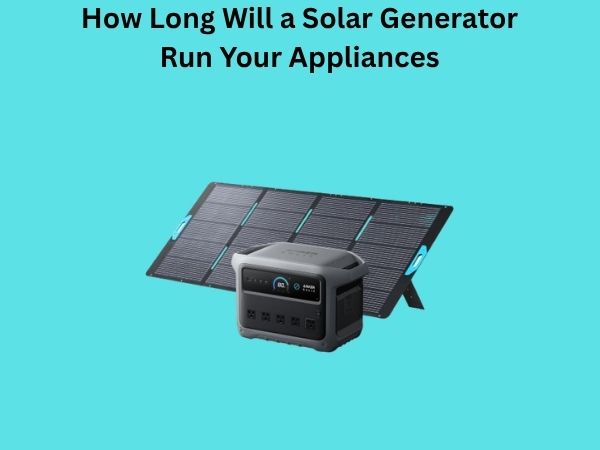
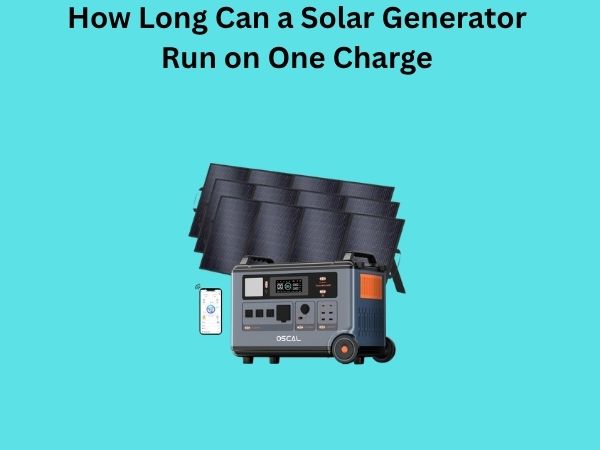
Let me start by demystifying what a solar generator actually is. Unlike traditional gas generators that burn fuel to create electricity, a solar generator is essentially a large battery system paired with solar panels. Think of it as a mechanical battery that captures sunlight and converts it into stored electrical energy.
The system typically consists of three main components: the solar panels that collect energy, the charge controller that regulates power flow, and the battery bank that stores everything for later use. When you ask how long a solar generator can run, you’re really asking two questions at once: how much energy is stored, and how fast are you using it?
The Core Components Explained
The solar panels are your energy harvesting tools. They come in various wattages, and more panels mean faster charging during the day. However, having more panels doesn’t necessarily mean longer runtime at night—it just means you’ll recharge faster the next day.
The battery is where the magic happens. This is what determines your actual runtime when the sun isn’t shining. Most modern solar generators use lithium-ion or lithium iron phosphate batteries, which are more efficient than older lead-acid technology.
Battery Capacity and What It Really Means
You’ve probably seen solar generators advertised with numbers like “3000Wh” or “5000Wh.” The “Wh” stands for watt-hours, and this number represents how much energy your battery can store. But here’s where it gets tricky: that advertised capacity isn’t always the usable capacity.
Watt-Hours Versus Amp-Hours
Let me break this down simply. A watt-hour is the amount of power (in watts) delivered over one hour. If your solar generator has a capacity of 2000Wh, it could theoretically power a 2000-watt device for one hour, or a 1000-watt device for two hours, or a 100-watt device for twenty hours.
Some manufacturers list their battery capacity in amp-hours instead. To convert this to watt-hours, you multiply amp-hours by the system voltage. For example, a 100Ah battery at 48V would be 4800Wh. Understanding this distinction helps you compare products accurately across different brands.
The Depth of Discharge Factor
Here’s something manufacturers don’t always emphasize: you can’t use 100% of your battery’s stated capacity if you want it to last more than a few years. Most lithium batteries perform best when you only discharge them to 80 or 90 percent of their maximum capacity.
This means if you have a 5000Wh generator with an 80% depth of discharge, you’re really only working with 4000Wh of usable energy. It’s like having a gas tank that only fills to the three-quarter mark—frustrating once you realize it.
The Power Consumption Factor: The Real Determinant of Runtime
Battery capacity is only half the equation. The other half is how much power you’re drawing from your system. This is where most people make mistakes in their calculations.
Continuous Versus Peak Power Draw
Solar generators have two power ratings: continuous (also called sustained) power and peak (surge) power. The continuous rating is what your generator can safely deliver indefinitely. Peak power is the maximum it can deliver for short bursts, usually 10 to 30 seconds.
When calculating runtime, you need to focus on continuous power draw. If you’re running a microwave that uses 1000 watts continuously, and your solar generator has a 5000Wh capacity, you might think you’d get five hours. But if the generator only has a 2000-watt continuous rating, it won’t even power that microwave safely.
Calculating Your Actual Runtime
Here’s the formula you need: Runtime (hours) = Usable Battery Capacity (Wh) ÷ Power Draw (watts). Let’s work through a real example. You have a 3000Wh solar generator with an 85% usable capacity, giving you 2550Wh of actual energy to work with. You’re running a laptop that draws 60 watts continuously.
2550Wh ÷ 60W = 42.5 hours of runtime. That’s impressive, right? But let’s add a phone charger using another 15 watts, plus LED lights using 20 watts. Now you’re at 95 watts total draw, which brings your runtime down to about 26.8 hours. See how quickly this changes?
How Weather Affects Your Charging and Runtime Capabilities
Here’s where solar generators get interesting: unlike gas generators, their performance varies dramatically with weather conditions. A cloudy day isn’t just a minor inconvenience—it can cut your charging capacity in half.
Sunlight Intensity Variations
A clear, sunny day at solar noon will provide maximum charging. But cloud cover, humidity, dust on panels, and even the angle of the sun all impact how much energy your panels collect. During winter months in northern climates, the sun sits lower on the horizon, providing less intense light.
On a partly cloudy day, you might only get 40 to 60 percent of the maximum charging capacity. In heavy overcast conditions, it could drop to 10 to 20 percent. This means your solar generator might take two or three days to fully recharge instead of one.
Seasonal Impact on Solar Generation
If you’re counting on your solar generator in winter, expect significantly reduced performance. The combination of lower sun angles, shorter daylight hours, and more frequent cloud cover means your panels will charge much more slowly. Some people find their winter charging capacity is only 30 to 40 percent of their summer capacity.
Real-World Runtime Examples for Different Appliances
Let’s get practical and look at specific scenarios. I’ll use a 5000Wh solar generator as our example, assuming 85% usable capacity, giving us 4250Wh to work with.
Light Load Scenario
Imagine you’re camping with just basic needs. You’re running some LED lights (50 watts), a laptop (60 watts), and charging phones (30 watts). That’s 140 watts total. Your runtime would be 4250Wh ÷ 140W = approximately 30.4 hours, or just over a day and a quarter.
Moderate Load Scenario
Now let’s say you add a small refrigerator (150 watts average), which cycles on and off. Your total draw is now 290 watts. Your runtime drops to 4250Wh ÷ 290W = about 14.7 hours, or roughly a day.
Heavy Load Scenario
You’re running that fridge, plus a microwave for cooking (1000 watts peak, but let’s say 300 watts average when accounting for intermittent use), plus the lights and devices. You’re drawing roughly 500 watts continuously. Your runtime is now 4250Wh ÷ 500W = 8.5 hours.
High-Demand Scenario
Running power tools or attempting to power a full kitchen setup? If you’re drawing 1500 watts continuously, your 5000Wh generator runs for only 4250Wh ÷ 1500W = 2.8 hours. This is why people often underestimate how quickly their battery drains.
Charging Speed and Recharging Cycles
Understanding how fast your solar generator recharges is just as important as knowing its capacity. If your generator takes three days to fully recharge, your daily usable energy is effectively limited.
Factors That Affect Charging Speed
- Total wattage of your solar panels
- Direct sunlight hours available in your location
- Current temperature (heat reduces efficiency)
- Battery chemistry and condition
- Charge controller efficiency
A 5000Wh battery paired with 400 watts of solar panels in ideal conditions might fully charge in about 12 to 14 hours of peak sunlight. But in average conditions with some cloud cover, you’re looking at 18 to 24 hours. In winter, it could take 2 to 3 days.
AC Charging as a Backup Option
Many solar generators include the option to charge from a wall outlet. This is incredibly useful when weather doesn’t cooperate. AC charging is typically much faster than solar charging—you might charge that 5000Wh battery in 6 to 10 hours depending on the generator’s AC input wattage.
Factors That Reduce Battery Performance and Lifespan
Your solar generator isn’t just a purchase—it’s an investment. Several factors can reduce its effectiveness over time and shorten its lifespan.
Temperature Effects on Battery Performance
Lithium batteries perform best between 50 and 85 degrees Fahrenheit. In cold conditions below freezing, battery capacity decreases significantly, sometimes by 20 to 30 percent. Heat above 100 degrees Fahrenheit also degrades performance and lifespan.
This is why your solar generator might seem weak in winter and perform better in spring and fall. You’re not imagining it—the battery is genuinely less efficient in cold temperatures.
Deep Discharge Cycles
Repeatedly draining your battery completely to zero percent significantly reduces its lifespan. Each time you fully deplete a lithium battery, you’re putting stress on the cells. Ideally, you want to keep your battery between 20 and 80 percent charge for maximum longevity.
Overcharging and Overheating
Modern solar generators have built-in protection circuits to prevent overcharging and overheating. However, leaving your generator in direct sunlight with the panels connected while it’s already fully charged isn’t ideal. The built-in protections work, but they generate heat, which degrades the battery over time.
Maximizing Your Solar Generator’s Runtime
Want to get the most out of your system? Here are strategic approaches that actually work.
Prioritize Your Loads Intelligently
Not all devices are created equal in terms of power consumption. A laptop uses 60 watts, but a hair dryer uses 1800 watts. If you’re trying to extend your runtime, obviously skip the hair dryer. Focus on essential devices: communication equipment, lighting, refrigeration for medications, and perhaps entertainment.
Use Devices During Daylight Hours
This seems obvious, but most people don’t think about it strategically. Do your power-hungry tasks like laundry, charging vehicles, or running power tools during peak solar hours when your panels are actively charging the battery. Reserve your battery discharge for nighttime when the sun isn’t available.
Optimize Panel Placement
Your panels should face the sun directly. In the northern hemisphere, that means south-facing panels. The angle matters too—ideally matching your latitude. Panels that sit flat on the ground or are pointed the wrong direction might charge 50 percent slower than optimally positioned panels.
Keep Panels Clean
Dust, pollen, bird droppings, and leaves reduce solar panel efficiency. Even light dust can reduce output by 10 to 20 percent. A simple weekly cleaning with a soft cloth and some water can keep your panels performing at their peak.
Seasonal Considerations for Year-Round Use
If you’re planning to use your solar generator year-round, you need to understand seasonal variations.
Summer Performance
Summer is when your solar generator shines brightest—literally. You’ll get the fastest charging times and longest daylight hours. A solar generator that takes 12 hours to charge in summer might take 24 to 36 hours in winter. Summer is the time to build up your battery reserves if possible.
Winter Adjustments
In winter, plan for reduced charging capacity and increased power consumption for heating. If you’re using a space heater, that’s a 750 to 1500-watt draw, which will drain even a large solar generator in just a few hours. Consider using alternative heating methods or drastically oversizing your solar panel array for winter use.
Spring and Fall Optimization
These shoulder seasons are often the sweet spot. You get decent solar charging with moderate temperatures. This is when you can balance your battery usage most effectively.
Comparing Different Solar Generator Sizes
Solar generators come in various sizes, and choosing the right one depends on your specific needs.
Portable Units (1000-3000Wh)
These lightweight generators are perfect for camping, outdoor events, or emergency backup for essentials. A 2000Wh portable generator will run a laptop for about 30 hours, a small fridge for about 13 hours, or a TV and some lights for roughly 8 to 10 hours. They’re usually cheaper and easier to transport, but limited in what they can power simultaneously.
Mid-Range Units (3000-8000Wh)
This is the sweet spot for many homeowners seeking backup power. These generators can run an average household for a day or two during power outages, especially if you’re careful about what you plug in. They’re large enough to provide real utility but still portable enough to move if necessary.
Large Systems (8000Wh and Above)
These are semi-permanent installations that can power a home almost continuously when paired with adequate solar panels. They’re the closest thing to a grid replacement solution, though the upfront cost is substantial—often $8,000 to $15,000 or more.
Tips for Extending Battery Life and Efficiency
Think of your solar generator battery like your own body—it responds well to good habits and poor care habits show up immediately.
Avoid Frequent Full Discharges
Never let your battery drop below 10 percent if you can help it. Each full discharge cycle stresses the battery. Instead, charge when you hit 20 percent remaining. If you follow this practice, you might extend battery life by