Off-Grid Living: How Long Can a Solar Generator Power a House?
Have you ever wondered what it would be like to break free from the traditional power grid? Maybe you’re tired of those monthly electricity bills, or perhaps you’re concerned about environmental impact. Whatever your reason, solar generators have become an increasingly popular solution for homeowners looking to achieve energy independence. But here’s the million-dollar question: how long can a solar generator actually power your entire house? That’s what we’re diving into today.
Understanding Solar Generator Basics
Before we answer the big question, let’s get on the same page about what a solar generator actually is. Think of it as a sophisticated power bank on steroids. Unlike traditional generators that run on gasoline or diesel, solar generators store energy from the sun and convert it into usable electricity for your home.
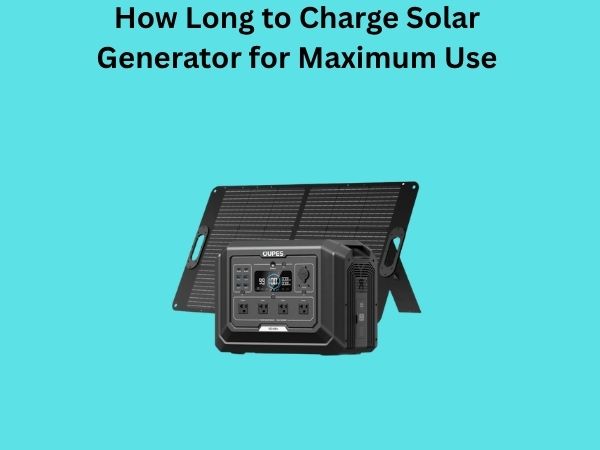
A complete solar generator system typically includes three main components: solar panels that capture sunlight, a battery bank that stores the energy, and an inverter that converts stored direct current into alternating current that your appliances can use. It’s like a three-part ecosystem working together to keep your lights on and your refrigerator running.
How Solar Generators Differ from Traditional Generators
Traditional generators are loud, emit fumes, and require constant fuel supply. Solar generators, on the other hand, operate silently and only require sunlight. They’re also significantly cheaper to operate once installed because sunlight is free. Plus, there’s something genuinely satisfying about powering your home with renewable energy.
Calculating Your Home’s Power Requirements
Here’s where things get interesting and slightly complicated. The duration a solar generator can power your house entirely depends on how much electricity your home actually uses. This varies wildly from household to household.
Daily Energy Consumption Assessment
To figure out your energy needs, start by examining your electricity bills from the past year. Most utility bills show your daily kilowatt-hour consumption. An average American home uses between 24 to 30 kilowatt-hours per day, though this varies significantly based on location, season, and lifestyle.
You can also perform a manual audit by listing every appliance and noting how many hours it runs daily. Your refrigerator might use 2,000 watts continuously, while your air conditioner could draw 3,500 watts when running. Add them all up, and suddenly you understand why powering an entire house is a significant challenge.
Peak vs. Average Usage
Here’s a crucial distinction: peak usage and average usage are completely different animals. Peak usage is when all your appliances run simultaneously—maybe you’re doing laundry, running the dishwasher, and someone’s taking a hot shower all at once. Average usage spreads that same total energy across the entire day.
A solar generator needs sufficient capacity to handle peak loads, but its duration depends on average consumption. This is why understanding both metrics is essential for proper system sizing.
Battery Capacity and Runtime Explained
Battery capacity is measured in kilowatt-hours (kWh), and this number determines how long your system can power your home. Think of it like a water tank—the larger the tank, the longer it lasts between refills.
Understanding Battery Specifications
A 10 kWh battery system can theoretically power a house consuming 10 kilowatt-hours per day for exactly one day with full sunlight. However, real-world scenarios are more nuanced because you can’t actually use 100 percent of your battery capacity.
Most lithium batteries are designed with a usable capacity of 80 to 90 percent. You never want to completely drain a battery because it damages the cells. So that 10 kWh battery actually gives you about 8 to 9 kWh of usable energy. It’s similar to how your car’s gas tank isn’t meant to run completely empty.
Typical Runtime Calculations
Let’s work through a practical example. Suppose you have a 15 kWh battery system and your home uses 20 kilowatt-hours daily on average. Without any solar input, that 15 kWh system would power your house for approximately 18 hours before the battery is significantly depleted.
But wait—that’s only if you’re not drawing power during those hours. In reality, people use electricity around the clock, which is why most off-grid systems absolutely require daily solar input to remain viable.
Real-World Scenarios and Duration Times
Let’s examine some realistic situations that homeowners actually face.
The Moderate Home Scenario
Imagine a family of four living in a moderate-sized home with typical energy habits. They’re using about 25 kilowatt-hours daily. If they install a 30 kWh battery system with 8 to 10 kilowatts of solar panel capacity, here’s what happens:
On a sunny day with good conditions, their solar panels generate enough electricity to power the house and recharge the battery simultaneously. The battery acts as an insurance policy, storing excess energy for cloudy days or nighttime use. In this scenario, the battery lasts through one full night and covers most of the next day until the sun comes back strong.
Without any solar input, that 30 kWh battery could theoretically power the home for about 36 hours, accounting for the 80-90 percent usable capacity. However, this is worst-case scenario thinking.
The Energy-Conscious Home Scenario
Now consider a household that’s extremely mindful about energy consumption. They’ve upgraded to LED lighting, installed a high-efficiency heat pump, and eliminated phantom loads. Their average daily consumption is only 12 kilowatt-hours.
A 15 kWh battery system would power this home for approximately 36 hours without any solar input. With a decent solar array, this system could genuinely operate indefinitely in regions with adequate sunlight throughout the year. The battery cycles daily, storing excess daytime energy for nighttime and cloudy day use.
The High-Consumption Home Scenario
On the opposite end, consider a larger home with electric heating, cooling, multiple electric vehicles, and a generally high energy lifestyle using 40 kilowatt-hours daily. A 50 kWh battery system would last approximately 30 hours without solar input.
This home would require a much larger solar array and possibly additional battery capacity to achieve true energy independence. In many cases, such homes need 15-20 kilowatts of solar panel capacity and 60-80 kWh of battery storage.
Factors That Affect Power Duration
Several variables dramatically influence how long your solar generator can power your house. Understanding these factors helps you set realistic expectations.
Geographic Location and Sunlight Availability
A solar generator in Arizona performs vastly differently than one in Seattle. Sunlight intensity, duration, and frequency of cloudy days vary tremendously by location. Areas closer to the equator receive more consistent solar radiation throughout the year, while northern regions experience significant seasonal variation.
This geographical reality means your battery must be sized appropriately for your specific location. A system that works perfectly in California might struggle through winter in Maine.
Seasonal Variations
Winter presents the biggest challenge for solar-powered homes. Days are shorter, the sun sits lower in the sky, and cloud cover increases in many regions. Your solar panels generate significantly less electricity during winter months, which means your battery gets taxed harder.
Some off-grid homeowners intentionally reduce energy consumption during winter or maintain a larger battery bank to handle the reduced solar input season.
Weather Conditions
Cloudy days dramatically reduce solar generation. A heavily overcast day might produce only 10-25 percent of what clear-sky conditions generate. This is why battery capacity must account for multi-day periods of poor weather.
Interestingly, some solar panels actually perform slightly better in cooler temperatures, though reduced sunlight hours generally outweigh this benefit during winter.
System Age and Battery Degradation
Solar batteries degrade over time. Lithium batteries typically retain 80-90 percent of their capacity after 10 years, while lead-acid batteries degrade faster. As your battery ages, the duration it can power your home gradually decreases.
Planning for this degradation when sizing your initial system ensures you won’t fall short as the technology ages.
Optimizing Your Solar Setup for Maximum Duration
If you want your solar generator to power your house as long as possible, you need a strategic approach.
Right-Sizing Your Battery Bank
The general rule of thumb is to install enough battery capacity to cover 3 to 5 days of energy consumption without any solar input. This provides a comfortable buffer for extended cloudy periods.
If your home uses 25 kilowatt-hours daily, a 75-125 kWh battery system would be appropriate. Yes, this is a significant investment, but it’s the difference between occasional blackouts and genuine energy independence.
Installing Adequate Solar Panel Capacity
More solar panels mean faster battery charging during daylight hours. A general guideline is 1 kilowatt of solar panel capacity for every 100 watts of average power consumption.
If your home uses 25 kWh daily, you’d roughly need 10-15 kilowatts of solar panel capacity to reliably generate enough energy while simultaneously powering your home and charging your battery.
Energy Efficiency Improvements
Before investing in massive solar and battery systems, honestly assess your energy consumption. Upgrading insulation, installing energy-efficient appliances, and improving HVAC efficiency dramatically extends how long your solar generator can power your home.
Reducing consumption by 30 percent through efficiency improvements is often cheaper than expanding your solar array by 30 percent.
Load Management Strategies
Smart load management involves running high-energy appliances during peak solar production hours. Running your dishwasher and laundry in the afternoon when solar generation is strongest reduces battery strain. Some homeowners even shift their cooking patterns to maximize daytime solar use.
Seasonal Considerations for Year-Round Power
Achieving consistent power throughout the year requires acknowledging seasonal reality.
Winter Power Planning
Winter demands careful planning. In northern latitudes, solar generation might drop to 30-50 percent of summer levels. Many off-grid homes either increase battery capacity, reduce winter consumption, or maintain a backup generator for extended cloudy periods.
Some homeowners use diesel generators solely during winter months when solar generation is minimal, allowing them to reduce their initial battery investment while maintaining reliability.
Summer Advantages
Summer is when solar systems truly shine. Long days and intense sunlight mean abundant energy generation. Your battery charges fully early in the day, and excess energy can power additional loads or go unused.
Intelligent system design takes advantage of summer abundance to offset winter scarcity. It’s a balancing act across seasons.
Maintenance and Longevity Factors
How well you maintain your system directly affects how long it can power your home.
Battery Maintenance Requirements
Lithium batteries are relatively maintenance-free, but they require proper charge management. A quality battery management system ensures your battery charges and discharges optimally, extending its lifespan significantly.
Lead-acid batteries require more attention—periodic equalization, water level checks, and careful charge control. They also degrade faster than lithium alternatives.
Solar Panel Care
Keep your solar panels clean and free from obstructions. Dust, bird droppings, and snow reduce efficiency significantly. Regular inspection ensures your system generates maximum power, which directly translates to longer battery runtime.
Cost Analysis: Investment for Duration
The investment required to power your house with solar generators varies tremendously.
System Component Costs
Quality solar panels cost approximately $2.50-$3.50 per watt installed. A 10 kW system would cost $25,000-$35,000 just for panels. Battery storage is even more expensive—lithium batteries run $150-$250 per kWh. A 30 kWh battery bank could cost $4,500-$7,500 alone.
Total system costs for a complete off-grid setup typically range from $40,000 to $100,000+ depending on your requirements and location. This sounds expensive until you calculate 25-30 year payback periods considering eliminated electricity bills.
Return on Investment Timeline
A household paying $200 monthly for electricity would save $2,400 annually. Even with system costs of $60,000, that’s a 25-year payback period. However, electricity rates are rising, making solar increasingly attractive financially.
Conclusion
So, how long can a solar generator power a house? The honest answer is: it depends on numerous factors including battery capacity, home energy consumption, geographic location, weather patterns, and seasonal variations. A well-designed system can power a typical home indefinitely by generating and storing enough solar energy daily to meet average needs while maintaining battery reserves for cloudy periods.
Without any solar input, duration ranges from 18 hours for a modest system to 36+ hours for well-sized setups. In practical, real-world operation with intermittent solar generation, a properly designed solar system powers your home continuously throughout the year.
The key to success is honest assessment of your energy needs, appropriate system sizing with a 3-5 day battery buffer, adequate solar panel capacity, and a commitment to energy efficiency. While the initial investment is substantial, the long-term freedom from utility bills and independence from the power grid makes solar generation increasingly attractive for homeowners worldwide.
Whether you’re pursuing off-grid living for environmental reasons, financial independence, or resilience, understanding solar generator capabilities helps you make informed decisions. Start with an energy audit, consult with solar professionals in your area, and design a system matching your specific needs and lifestyle.
Frequently Asked Questions
Can a solar generator really power an entire house 24/7?
Yes, a properly designed solar system with adequate battery storage can power an entire house continuously. The key is matching battery capacity to your home’s energy needs, typically requiring 3-5 days of stored energy, combined with sufficient solar panels to generate daily requirements. During sunny periods, the system generates and stores energy. During nighttime or cloudy weather, the battery provides power. Without adequate system sizing, you’ll experience shortages during extended cloudy periods.
How many kilowatt-hours of battery do I need for my house?
The battery capacity needed depends on your daily energy consumption and how many days of autonomy you want without solar input. Multiply your daily consumption by 3-5 to get a starting point. If your home uses 25 kWh daily, a 75-125 kWh battery system would provide 3-5 days of independence. However, energy efficiency improvements can reduce this requirement significantly. It’s worth consulting with a solar professional who understands your local climate and weather patterns.