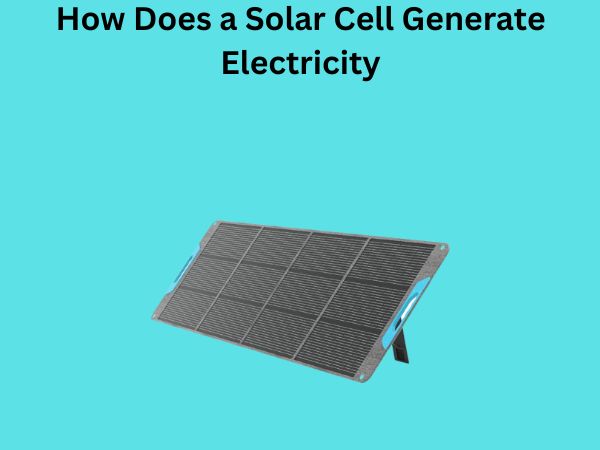
How Does a Solar Cell Generate Electricity? Simple Science Breakdown
Have you ever wondered what happens inside those shiny panels sitting on rooftops, turning sunshine into the power that runs your home? It’s one of those modern marvels that seems almost magical, yet the science behind it is actually quite elegant and understandable. Let me walk you through the fascinating journey of how a solar cell converts sunlight into usable electricity, breaking down the process into digestible pieces that anyone can grasp.
Understanding the Basics: What Is a Solar Cell?
Before we dive into the mechanics of electricity generation, let’s establish what we’re actually talking about. A solar cell, also called a photovoltaic cell, is a tiny semiconductor device that does something remarkable—it takes photons from the sun and transforms them into electrical current. Think of it like a microscopic power plant that operates silently and without fuel.
These cells are typically made from silicon, the same material found in sand, but processed and purified to an extraordinary degree. When you see solar panels on homes or in solar farms, you’re looking at collections of these individual cells wired together to create more substantial electrical output. A single cell might generate only a small amount of current, but thousands of them working in concert can power an entire household.
The Role of Photons: Light’s Invisible Workers
Everything starts with light coming from the sun. But here’s where it gets interesting—sunlight isn’t just a simple beam. It’s actually made up of tiny packets of energy called photons. These photons travel 93 million miles through space to reach Earth, carrying with them the energy that makes solar electricity possible.
What Exactly Are Photons?
Photons are fundamental particles that make up all electromagnetic radiation, including visible light. Each photon carries a specific amount of energy based on its wavelength. Think of them as tiny energy bullets fired from the sun toward Earth. When these photons strike a solar cell, they initiate the entire electricity generation process.
The beautiful part is that photons arrive constantly during daylight hours, and they’re completely free. This is why solar energy is renewable and sustainable—as long as the sun shines, we have an endless supply of these energy packets.
The Silicon Semiconductor: The Heart of the Matter
Most solar cells are constructed from silicon, and understanding silicon’s properties is crucial to understanding how solar electricity comes into being. Silicon is what’s known as a semiconductor, which means it has properties between conductors (like copper wire) and insulators (like rubber).
Pure Silicon Versus Doped Silicon
In its completely pure form, silicon doesn’t conduct electricity particularly well. But manufacturers alter this through a clever process called doping. This involves introducing tiny amounts of other elements into the silicon crystal structure.
When manufacturers add elements like phosphorus (which has five outer electrons), they create what’s called n-type silicon, or “negative type.” This silicon has extra electrons floating around, looking for somewhere to go. Conversely, when they add elements like boron (which has only three outer electrons), they create p-type silicon, or “positive type.” This version has “holes” where electrons are missing—gaps that electrons want to fill.
Here’s where the magic starts: when you press these two types of silicon together, they create a junction—a boundary where something extraordinary happens.
The P-N Junction: Where the Action Happens
The p-n junction is essentially the business end of a solar cell. It’s the interface where the p-type and n-type silicon meet, and it’s where electrons and holes engage in an intricate dance that generates electricity.
The Electric Field Forms
When these two silicon types are joined together, something fascinating occurs automatically. Electrons from the n-type silicon drift toward the p-type side, while holes from the p-type drift toward the n-type side. This movement creates an electric field—an invisible force pointing in one direction, like a microscopic highway that guides charged particles.
This electric field acts like a cosmic bouncer at a club. Once electrons and holes cross the junction into their opposite domains, the field prevents them from going back. It’s a one-way barrier that becomes absolutely essential for generating electricity.
The Depletion Region
Right at the junction, a region depletes of free charge carriers—this area is literally emptied of mobile electrons and holes. It becomes positively charged on the p-side and negatively charged on the n-side. This setup creates an internal voltage, even before any light shines on the cell.
Photons Strike: The Photovoltaic Effect Begins
Now here’s where the sun’s photons enter the story. When a photon with sufficient energy hits the silicon material, something remarkable happens—it knocks an electron loose from its atom. Imagine the photon as a tiny hammer, and the electron as a bell that rings when struck.
Electron-Hole Pair Generation
When a photon strikes an electron with enough energy, it sends that electron flying into a higher energy state, essentially freeing it from its parent atom. This creates two things simultaneously:
- A free electron with negative charge, ready to move around
- A hole with positive charge, left behind where the electron was
This electron-hole pair is the fundamental building block of solar electricity. Without photons creating these pairs, there would be no current. The more photons hitting the cell, the more electron-hole pairs get created, and the more electricity flows.
The Photons Must Have Enough Energy
Not every photon will successfully create an electron-hole pair. A photon needs sufficient energy to dislodge an electron from the silicon atom. This minimum energy requirement is called the bandgap energy. Photons with less energy simply pass through the cell without doing any work. This is actually why solar cells are more efficient at converting certain wavelengths of light than others.
The Electric Field Separates the Charges
Here’s where that electric field we discussed earlier becomes crucial. Once a photon creates an electron-hole pair near the p-n junction, the electric field immediately grabs hold of these charges and pushes them in opposite directions.
The electron gets pushed toward the n-type region, while the hole gets pushed toward the p-type region. This separation is critical because if the electron and hole simply recombined immediately, they’d cancel each other out and no current would flow. The electric field prevents this from happening, at least temporarily.
Charge Separation Creates Voltage
As electrons accumulate on one side and holes on the other, a voltage develops across the solar cell. This is the potential difference that drives electricity through an external circuit. It’s similar to how water pressure builds up behind a dam—the more separated the charges, the greater the voltage available to do work.
The External Circuit: Completing the Path
A solar cell sitting alone in the sun generates voltage but no useful current. To actually get electricity flowing and doing work, we need to connect that solar cell to an external circuit—something that needs power, like a light bulb, a battery charger, or your home’s electrical system.
How Current Flows
When you connect a wire from the positive side of the solar cell (where holes accumulate) to the negative side (where electrons accumulate), you create a path for electrons to flow. These electrons travel through the external circuit, powering whatever device is connected. This flow of electrons is electric current.
Meanwhile, inside the solar cell, the electric field continues creating new electron-hole pairs as photons arrive. The holes flow toward the p-type side while electrons flow toward the n-type side, maintaining the voltage difference that keeps current flowing through the external circuit.
The Continuous Cycle
As long as sunlight shines on the cell and an external circuit is connected, this process continues. Photons keep arriving, creating electron-hole pairs, the electric field separates them, and they flow through the circuit. It’s a continuous process that requires no moving parts, no fuel consumption, and produces no emissions—which is why solar energy is so appealing.
Understanding Current and Voltage in Solar Cells
To fully grasp how solar electricity works, it helps to understand the two key measurements that characterize a solar cell’s performance: current and voltage.
Voltage: The Pressure Behind Electrons
Voltage is the potential difference created by the separated charges in the solar cell. A single silicon solar cell typically generates about 0.5 to 0.6 volts under ideal conditions. This voltage comes from the electric field at the p-n junction and the accumulation of charges on either side. It’s like the water pressure behind a dam—it represents the potential to do work.
Current: The Flow of Electrons
Current is the actual flow of electrons through the external circuit, measured in amperes. A solar cell’s current depends on several factors: how many photons hit the cell, how many of those photons successfully create electron-hole pairs, and the size of the cell. Larger cells capture more photons and therefore generate more current than smaller ones.
Power: The Product of Voltage and Current
The actual electrical power output of a solar cell is calculated by multiplying voltage by current. If a cell produces 0.5 volts and 5 amperes, it generates 2.5 watts of power. This is why solar panels contain many individual cells—combining them in series increases voltage, while connecting them in parallel increases current capacity.
Factors Affecting Solar Cell Performance
Solar cells don’t generate electricity at the same rate all the time. Several factors influence how efficiently they convert sunlight into usable electricity.
Sunlight Intensity
The strength of sunlight hitting the cell dramatically affects output. On a bright sunny day at noon, the sun delivers about 1000 watts of energy per square meter of Earth’s surface. On a cloudy day, this might drop to just 100 watts per square meter. As intensity decreases, fewer photons hit the cell, creating fewer electron-hole pairs and reducing electricity generation.
Temperature Effects
Interestingly, solar cells actually perform worse when they get too hot. While you might think more heat equals more energy, it actually reduces the cell’s voltage output. This is because heat causes more electron-hole recombination—they cancel each other out before reaching the external circuit. Most silicon solar cells lose about 0.4% of their power output for every degree Celsius above 25°C (77°F).
Light Wavelength
Not all wavelengths of light are equally useful. Silicon solar cells have a bandgap that makes them most efficient at capturing wavelengths in the infrared and red parts of the spectrum. Blue light photons carry more energy than needed, and their excess energy is wasted as heat. Ultraviolet light has too much energy and also isn’t efficiently captured.
Angle of Incidence
The angle at which sunlight hits the solar cell matters significantly. When rays hit perpendicular to the surface, maximum photons reach the semiconductor. As the angle changes, fewer photons strike the cell directly. This is why solar panels work better when oriented toward the sun and why tracking systems that follow the sun throughout the day improve efficiency.
Converting DC to AC: Getting Usable Electricity
There’s one more important step in most solar electricity systems. Solar cells generate direct current (DC)—electricity that flows in one direction. However, most homes and appliances require alternating current (AC)—electricity that reverses direction many times per second. This is where an inverter comes in.
What Inverters Do
An inverter is an electronic device that converts the DC electricity from solar cells into AC electricity compatible with home wiring and appliances. Without this conversion step, solar energy would only work with DC devices like some LED lights and phone chargers. The inverter makes solar electricity truly practical for powering your entire household.
The Complete Picture: From Photon to Power
Let’s trace the complete journey one more time. A photon from the sun travels through space and strikes a silicon solar cell. The photon’s energy dislodges an electron from its atom, creating an electron-hole pair. The electric field at the p-n junction immediately separates these charges, pushing the electron one direction and the hole another. Electrons accumulate on one side of the junction while holes accumulate on the other, creating a voltage difference.
When an external circuit connects the two sides of the cell, electrons flow through that circuit from the negative side to the positive side, providing electrical current that powers lights, charges batteries, runs appliances, or feeds electricity into the grid. Meanwhile, inside the cell, new photons continuously arrive, creating new electron-hole pairs to maintain the flow. This elegant process continues as long as sunlight illuminates the cell.
Why Understanding Solar Cells Matters
Understanding how solar cells work isn’t just academic interest—it helps explain why solar energy is such a promising technology for our future. Because the process requires no moving parts, no combustion, no emissions, and no fuel consumption beyond free sunlight, solar represents a genuinely sustainable energy source. It’s becoming increasingly cost-effective, and the basic principles we’ve discussed have remained consistent even as technology improves efficiency and durability.
Conclusion
The process by which a solar cell generates electricity is a beautiful intersection of physics and engineering. From the moment a photon strikes silicon to the instant electricity powers your home, it’s a chain reaction that demonstrates the elegance of how nature works. Photons knock electrons loose, the p-n junction’s electric field separates charges, voltage builds up, and current flows through an external circuit—all without any moving parts or fuel. Understanding these principles helps us appreciate why solar energy represents such a promising future for clean, renewable electricity. As technology continues improving and costs continue falling, solar cells will likely play an increasingly important role in how we power our world. The next time you see a solar panel, you’ll know exactly what’s happening inside—countless photons engaging in a microscopic dance with electrons, continuously converting sunshine into the electricity that powers modern life.
Frequently Asked Questions
What is the photovoltaic effect, and how does it differ from other ways of generating electricity?
The photovoltaic effect is the phenomenon where photons from light directly produce electrical current in certain materials, specifically semiconductors like silicon. Unlike generators that rely on mechanical movement or thermal power plants that use heat to create steam, photovoltaic cells generate electricity directly from light without any moving components. This makes solar unique because there’s nothing to wear out, no fuel to burn, and no emissions to worry about. The photovoltaic effect is purely quantum mechanical—it occurs at the atomic level—whereas traditional generators convert mechanical or thermal energy into electricity through electromagnetic induction.
Can a solar cell generate electricity on cloudy days or at night?
Solar cells do generate electricity on cloudy days, but significantly less than on sunny days. Clouds reduce the intensity of sunlight reaching the cells, which means fewer photons strike the semiconductor surface. Depending on cloud cover, a solar panel might generate 10-25% of its optimal output. However, at night, solar cells produce essentially no electricity because there are no photons arriving from the sun. This is why solar systems typically use battery storage or grid connections—batteries store excess energy from sunny periods for use at night, while grid connections allow excess solar power to be sold during the day and drawn from the grid when the sun isn’t shining.
Why does temperature reduce solar cell efficiency?
Higher temperatures increase the thermal energy of electrons in the silicon semiconductor, causing more electron-hole pairs to recombine (cancel out) before they can contribute to electrical current. Additionally, heat increases the dark current—unwanted current that flows even without incoming photons—which reduces the cell’s voltage output. While it might seem counterintuitive that heat hurts solar performance, the issue is that excess thermal energy causes disorder that works against the organized charge separation we need for electricity generation. This is why solar panels in very